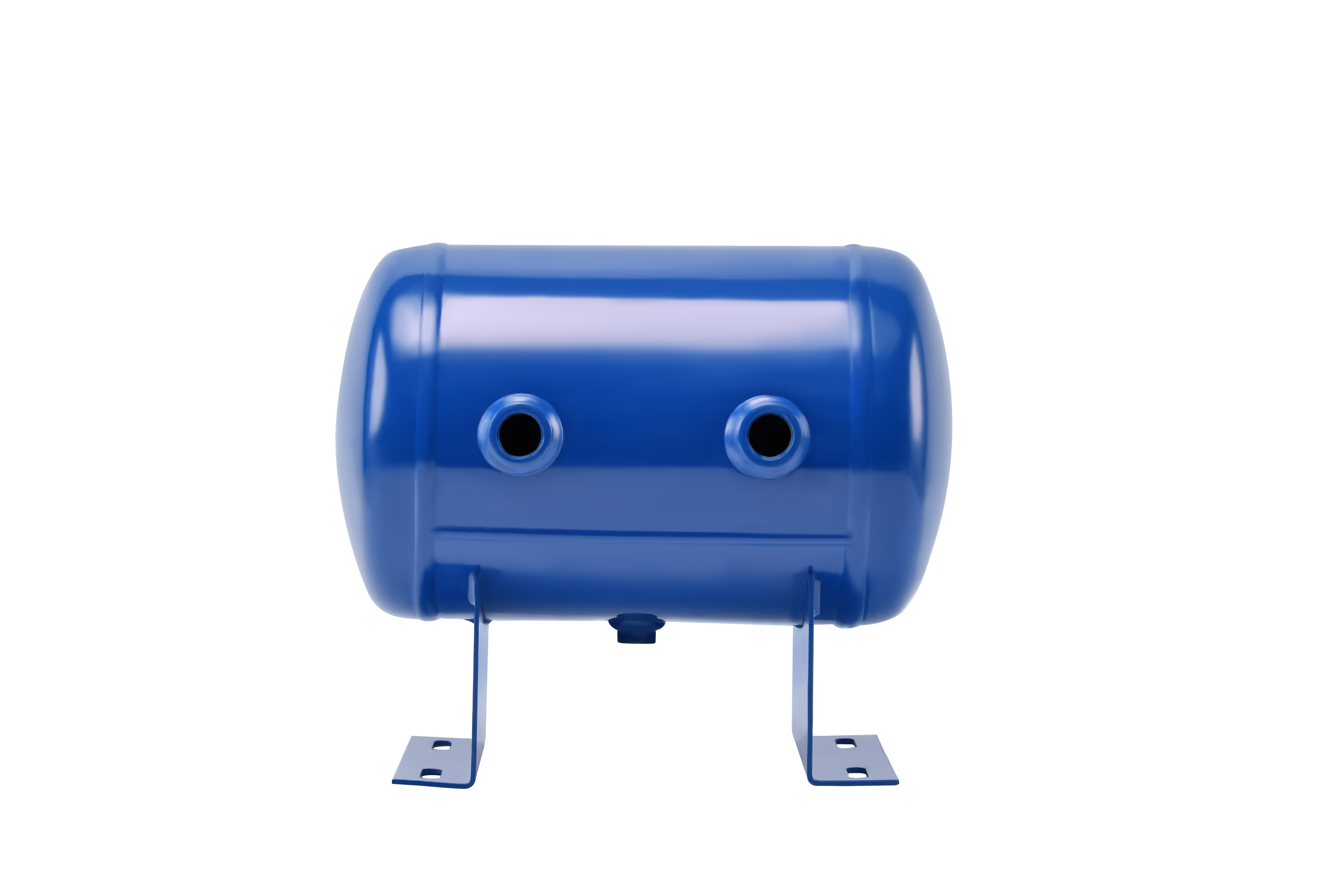
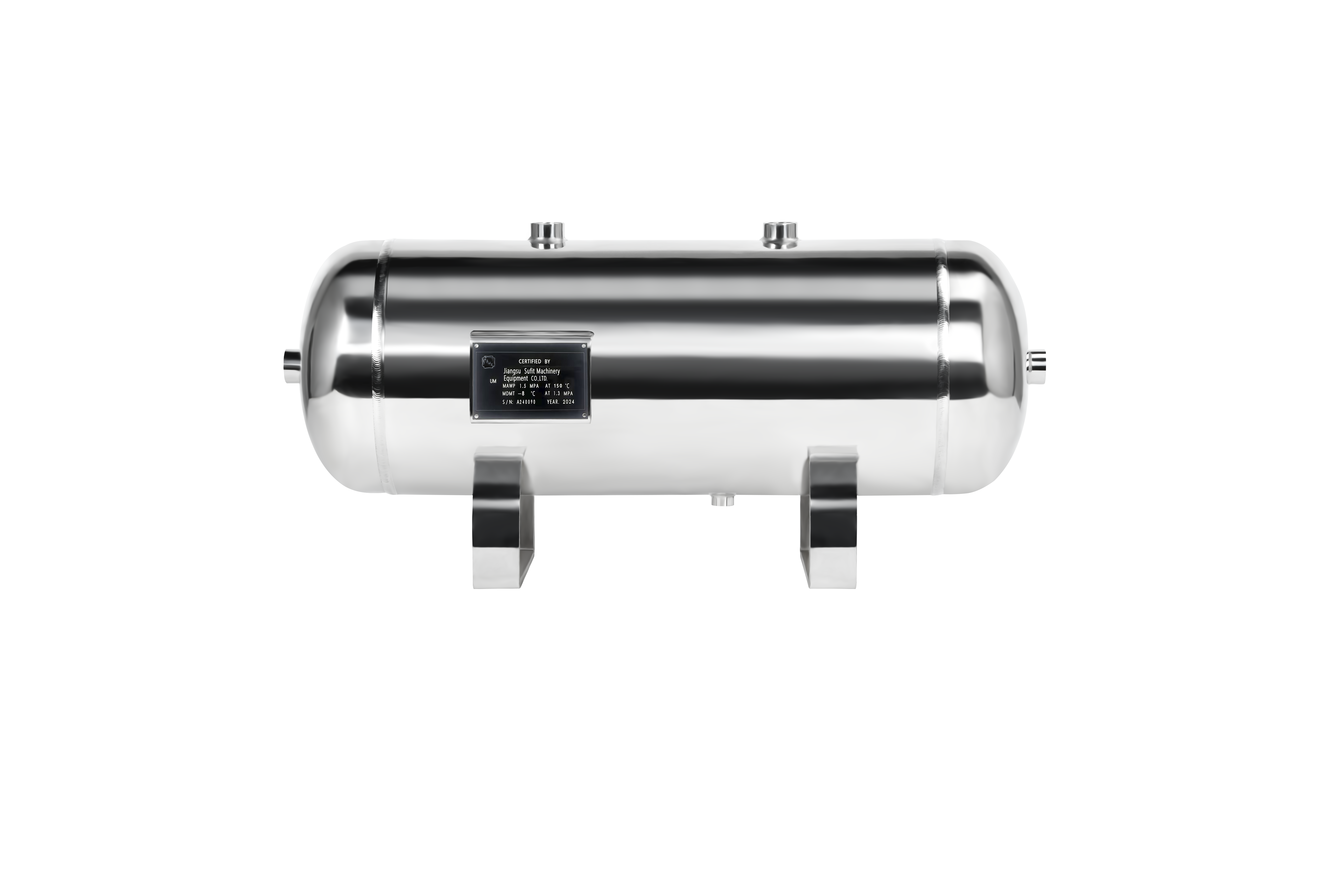
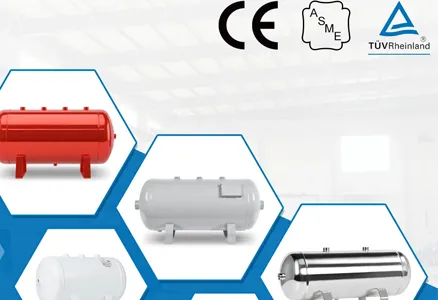
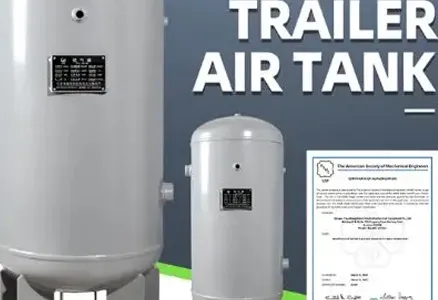
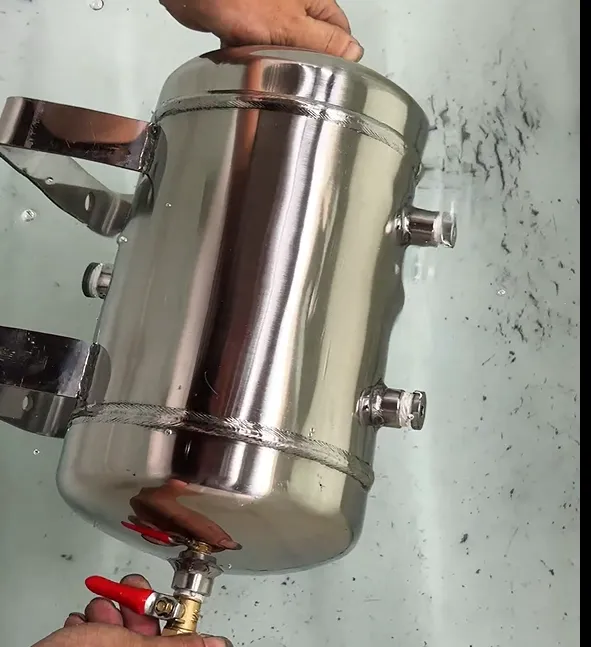
1. Is it a lower grade than a normal pressure vessel?
No. "Simple" does not describe the steel, the welds or the test standard. It describes the regulatory procedure.
It is still a pressure vessel: still designed to a pressure-vessel code, still weld-tested, still hydrostatically tested, still certified. The only difference is that when construction, pressure, volume, temperature and medium all fall inside a defined envelope, the regulator accepts the inherent risk as low and removes a layer of administration.
2. What qualifies a tank as "simple"?
Four parameters and one construction rule, all satisfied at the same time — not any one of them.
| Criterion | Requirement |
|---|
| Design pressure | ≤ 1.6 MPa(16 bar) |
| Volume | ≤ 1 m³( nominal, not measured capacity) |
| Design temperature | −20 ℃ ~ 150 ℃ |
| Medium | air, N₂, CO₂, inert gas, lubricating or edible oil; non-flammable, non-toxic, non-corrosive |
| Construction | shell with flat or dished heads (torispherical excluded), or two dished heads; single wall |
Two receivers at 1.0 MPa and 500 L can land on opposite sides of the line: one carries nitrogen, the other oxygen; one has a jacket, the other does not.
3. What does the tier actually remove?
No use registration — the vessel is connected and runs. Under current rules, no periodic in-service inspection cycle within its design life.
But removing procedure does not remove responsibility. Daily condensate draining, watching the gauge and relief valve each shift, and an annual self-check of shell and welds all remain with the owner. What is relaxed is administration, not safety.
4. Should I always buy the "simple" version, then?
Do the arithmetic across the line before deciding.
Take a receiver from 1 m³ to 1.2 m³ — 20 % more volume — and it moves from the simple tier back into full pressure-vessel territory: registration, periodic inspection, supervised manufacture, a thicker documentation pack. The tank may cost slightly more; the compliance cost is a different order of magnitude. The same applies going from 1.6 MPa to 2.0 MPa: it is not "a bit stronger", it reclassifies the vessel.
Building inside the envelope saves years of paperwork. Building as a full pressure vessel saves a second purchase when the plant expands. Both are rational — what is not rational is crossing the line without noticing.
5. Does the same classification apply to exports?
No. "Simple pressure vessel" is a Chinese regulatory category; it does not travel with the goods.
The same tank sold into the EU is assessed under PED and CE marking; into the US under ASME, where U or UM stamping depends on volume and pressure; into Malaysia, through DOSH registration.
A concrete case: a 1,000 L receiver at 16 bar sits neatly inside the Chinese simple tier. The EU's own "simple pressure vessel" directive (SPVD) requires pressure × volume to stay at or below 10,000 bar·L — this one is 16,000 bar·L, so it is assessed under PED, not the simple-vessel directive. Simple in China is not simple abroad.
6. How does YCZX decide which route applies?
The judgement we make most often for customers is not "can it be built" but "which route does it need" — and then the drawing, the certificate and the document pack follow that route:
Up to 1 m³ and 1.6 MPa — carbon steel or stainless, built on the simple-vessel route; standard sizes usually ship within a few working days; vertical or horizontal, with G, Rp or NPT threads to match your pipework.
Above 1 m³ or above 1.6 MPa — built as a full pressure vessel, with drawings, material certificates and weld and test records supplied together, so you are not left to assemble the dossier yourself.
Export — certified to the destination market, on all three routes: CE, ASME and DOSH.
We have manufactured air receivers since 2013, across three plants and 25,000 m² of floor space, holding ASME-U, ASME-UM, CE and DOSH certification.