When configuring a compressed air system, buyers usually focus on compressor horsepower and displacement, while the receiver tank is chosen casually. An oversized tank wastes capital and lengthens fill time; an undersized one cannot absorb demand spikes and causes frequent cycling. Correct sizing means matching buffering capacity to actual operating conditions.
1. What the Receiver Tank Does in the System
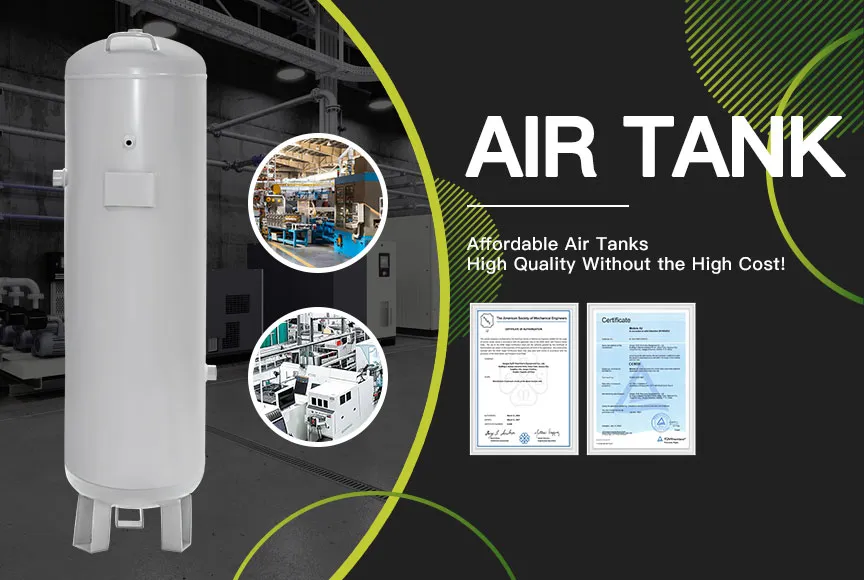
The receiver tank first acts as a pressure buffer, absorbing spikes from instantaneous demand by cylinders and pneumatic tools. It stores surplus air, reducing load/unload cycles and protecting the motor and airend. Hot compressed air cools inside the tank, allowing water vapor and oil mist to settle at the bottom and easing the load on downstream dryers and filters. During brief compressor shutdowns, it also provides a short-term reserve. Understanding these roles defines how much buffering the system requires.
2. How to Size: Rule of Thumb Verified by Formula
Engineering practice starts with a rule of thumb, then checks it with a calculation.
Under common North-American guidance, piston compressors deliver pulsating flow and need 2–3 gallons per 1 CFM; screw compressors deliver continuous, smooth flow and need 0.5–1 gallon per 1 CFM; VFD compressors follow demand through speed adjustment, allowing a smaller tank, though a base buffer volume remains for peaks.
For defined peak flow and allowable pressure swing, verify with the formula: V = (Q × T) × P_atm / (P_max − P_min), where Q is peak instantaneous consumption, T is the hold time before the compressor restarts, and P_max − P_min is the allowable pressure swing. Stored air covers peak demand during that period, keeping pressure within range.
3. Four Overlooked Sizing Factors
First, size around peak demand rather than average flow — intermittent high flow such as spraying, batch cylinder actuation or blow-down needs a larger tank than continuous low flow. Second, the more sensitive the process, the narrower the allowed swing and the larger the tank; precision instruments and packaging machines often require under 0.1 MPa. Third, compressor type determines tank size: fixed-speed piston units rely on a large buffer, screw units take a medium tank, and VFD units take the smallest. Fourth, site space and piping length count too: vertical tanks save floor space in tight workshops, while horizontal tanks suit integrated skids; longer lines with more elbows create more pressure drop and place greater stabilization demand on the receiver.
4. Four Common Sizing Mistakes
The first is sizing by compressor displacement alone, ignoring the actual demand curve — peak demand and allowable drop, not displacement, determine tank size. The second is oversizing, which lengthens fill time and raises cost and footprint, leaving idle volume in low-demand systems. The third overlooks condensate settling: a too-small tank passes suspended water into the dryer and shortens filter life. The fourth gets volume right but mismatches inlet/outlet size, gauge port, drain port or base frame, forcing on-site rework.
5. How YCZX Helps Match the Right Tank
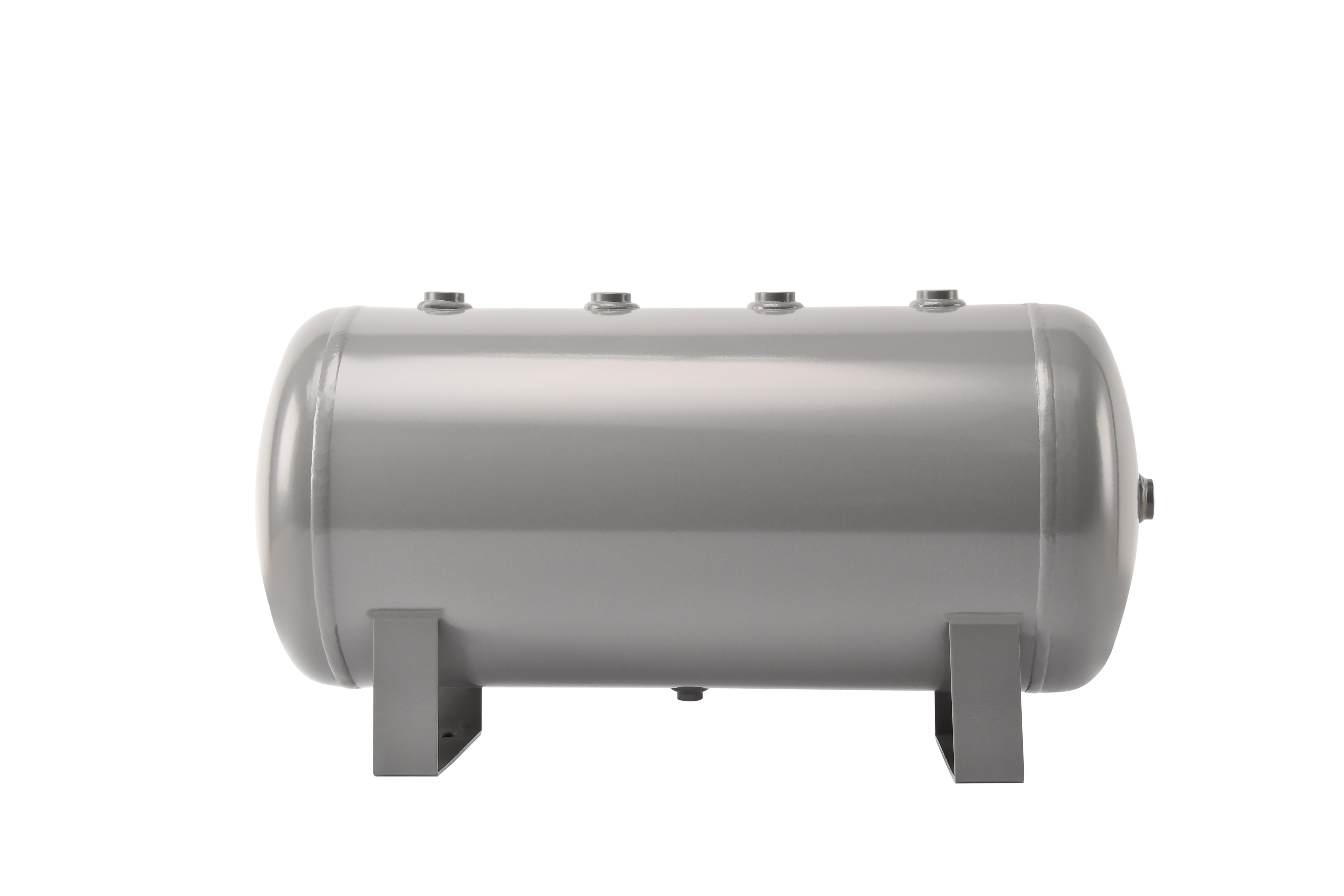
Receiver sizing cannot be solved by picking a generic standard dimension. On every project, YCZX first confirms compressor type, CFM displacement, peak demand curve, allowable pressure swing and site layout, then recommends volume and vertical or horizontal configuration. Ports are matched to field piping, with reserved gauge, safety valve and automatic bottom drain ports, eliminating on-site drilling and welding.
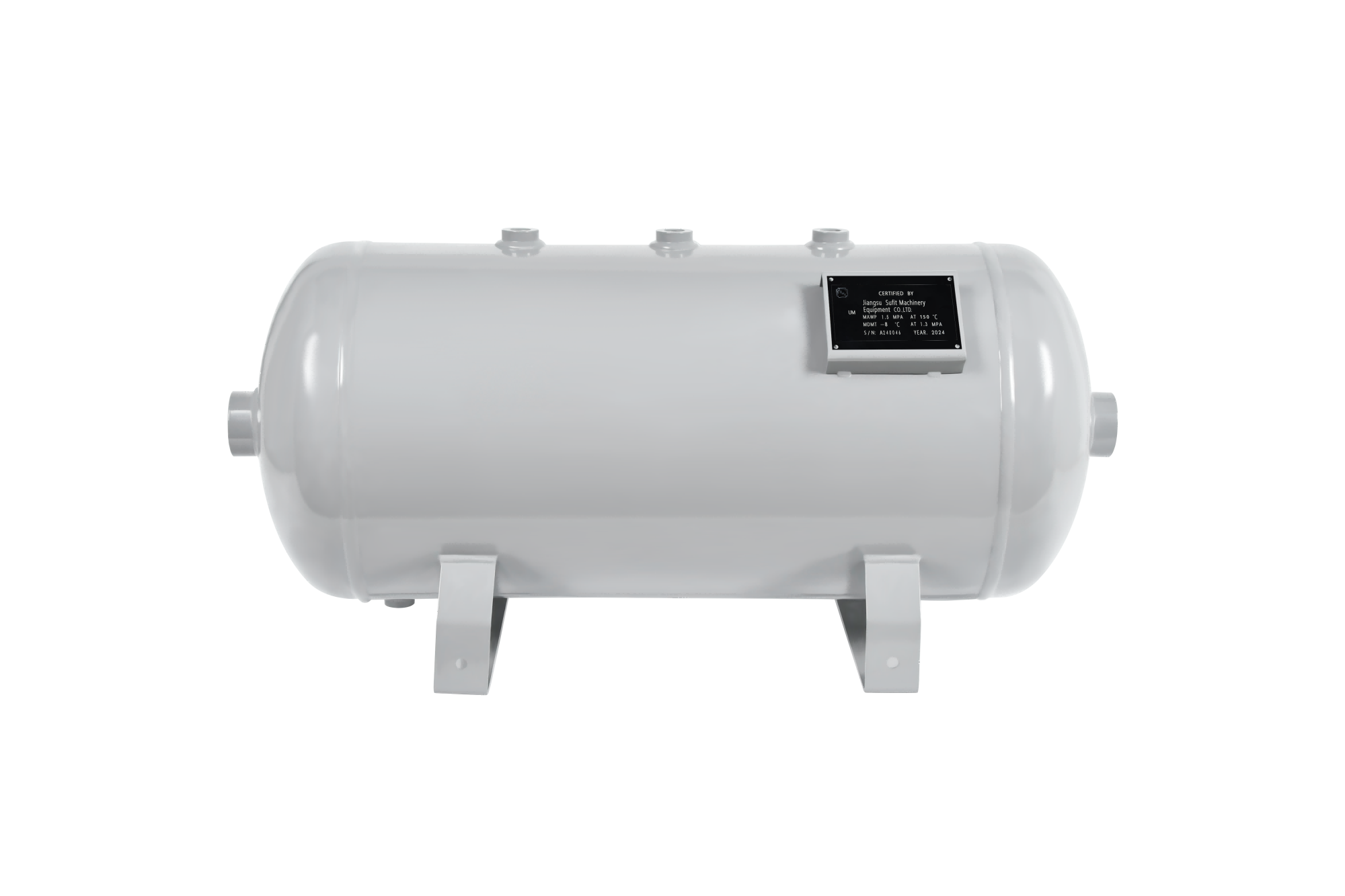
In manufacturing, we produce tanks to ASME U Stamp or PED standards according to target market. Each unit passes hydrostatic testing before shipment, with retained material certificates; surfaces are sandblasted for corrosion protection before industrial painting, and nameplates, drawings and complete export documentation are supplied. For complete compressor packages, brackets, port orientation and tank dimensions are customized to the skid base, so the receiver ships as an integrated part of the unit rather than being assembled on site. From operating-profile calculation and spec matching to certification documentation and export packaging, YCZX delivers a buffer receiver solution that works as one system with the compressor package.
6. Conclusion
Receiver sizing is about matching tank volume, port configuration and certification level to your compressor operating conditions, target market and installation conditions. Clarifying the demand curve and system profile up front costs far less than replacing the tank later. Choosing a manufacturer that can calculate conditions, build to standard and supply complete export documentation is what makes the receiver truly stabilize pressure, protect equipment and extend service life. That has been YCZX's mission in long-term supply to compressor manufacturers and system integrators: to size every buffer receiver correctly, build it to compliance and match it precisely to the system.