Tank supports are often treated as an afterthought — "just weld a few legs on." In reality they carry the full weight of the vessel, the loads generated by internal pressure, and the impact forces of transport and installation. The wrong support design leads to a tilted tank, off-center port loading and leaks, or worse, stress-concentration cracks at the leg roots or shell. This article explains when to use three-leg or four-leg supports on vertical tanks, when to use saddle supports on horizontal tanks, and what to check during selection.
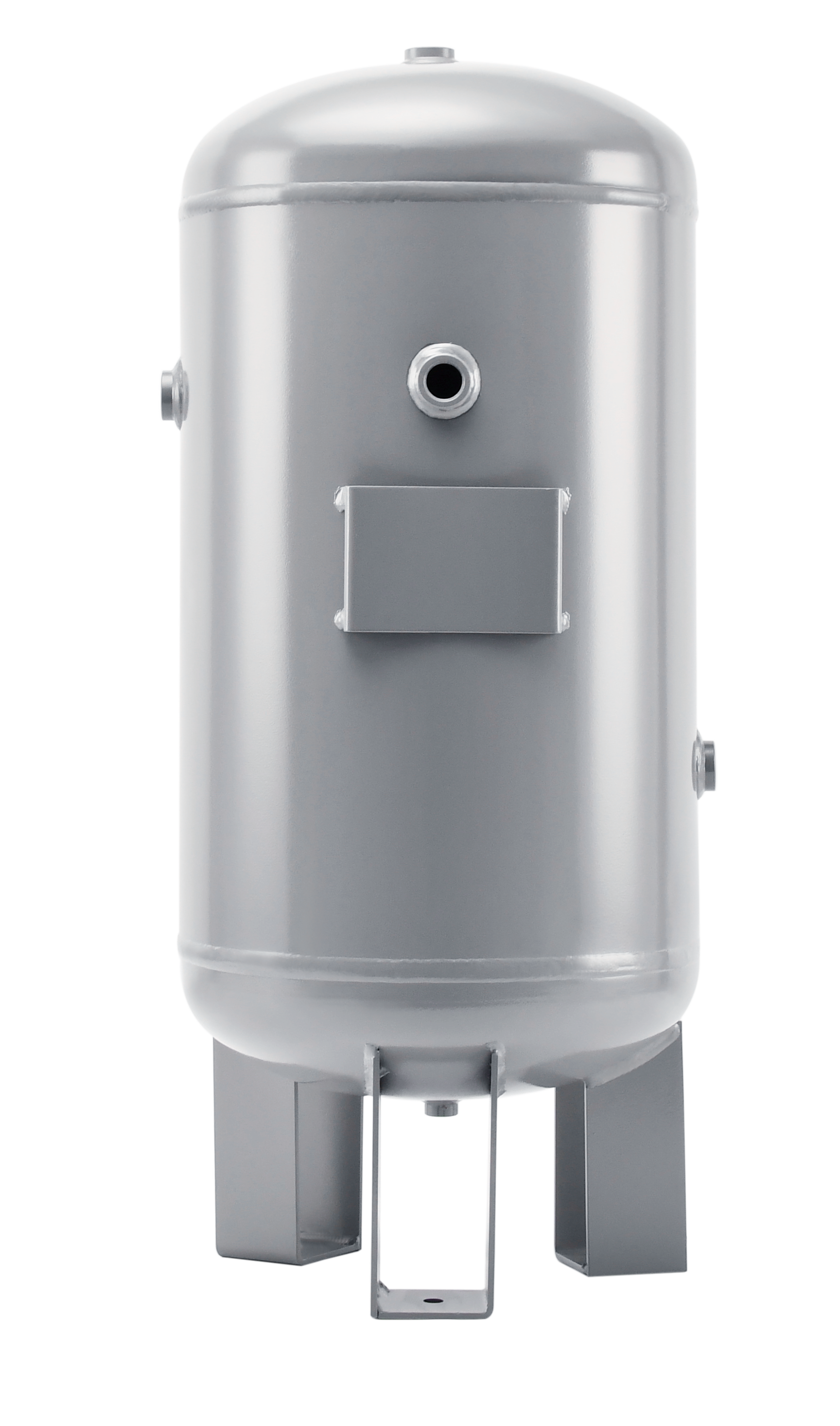
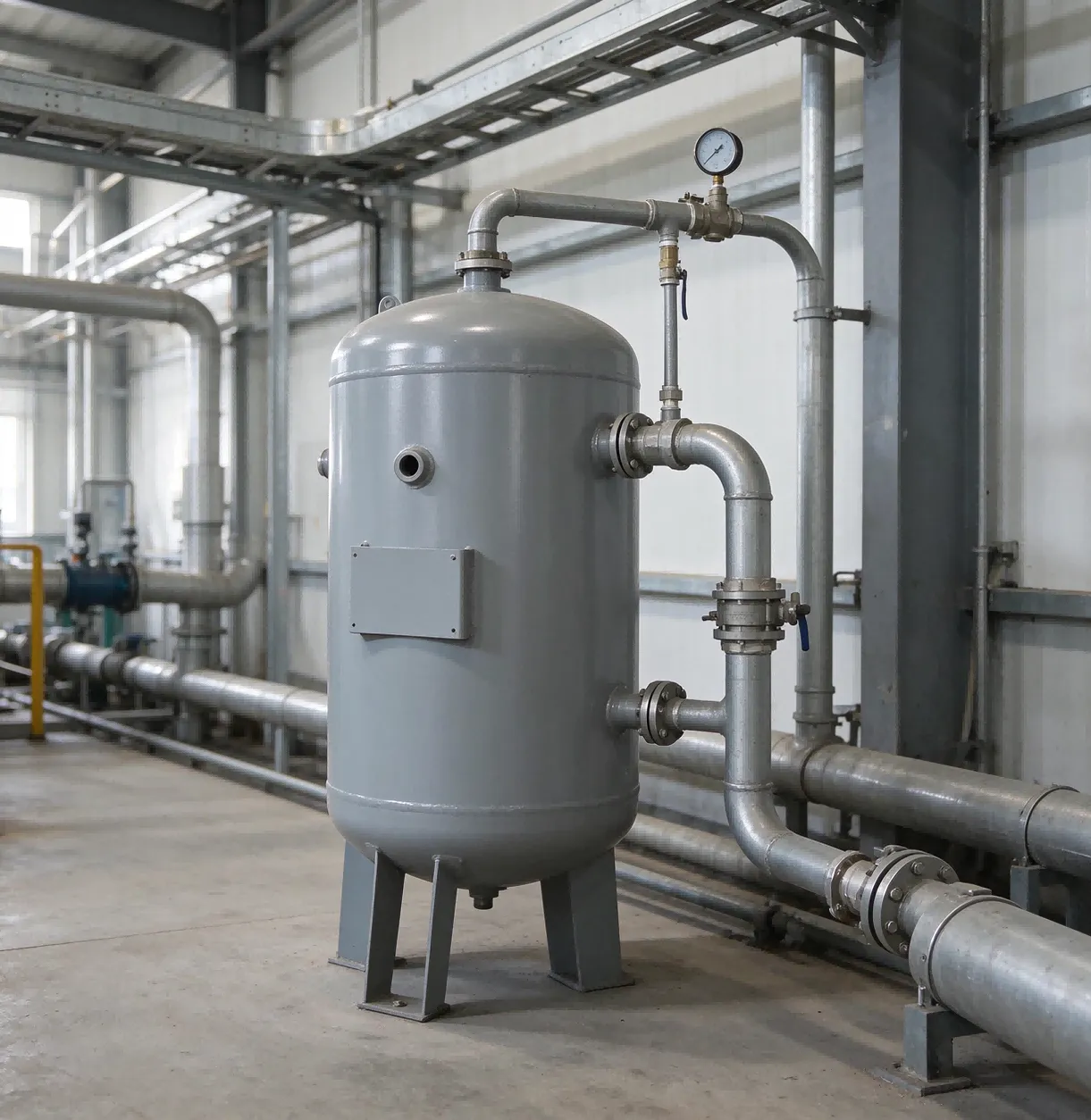
Vertical receiver tank supports are legs extending from the lower shell or head edge, lifting the vessel off the floor to leave space for draining and inspection.
Three-leg supports are the most common economical option. Three-point support is statically determinate in theory: once landed, it bears load stably without deliberate leveling, and requires the least fabrication and welding. It suits small-to-medium vertical tanks in workshops with level floors and no need for frequent relocation. But three-leg designs have limited resistance to overturning; if the tank has a high height-to-diameter ratio, a high center of gravity, or is installed outdoors with wind or vibration, stability is insufficient.
Four-leg supports use four-point support with clearly better resistance to overturning and lateral sway. They suit vertical tanks with high height-to-diameter ratios, larger volumes, or more demanding installation conditions such as outdoors or near vibration sources. The trade-off is higher sensitivity to floor levelness: on uneven ground, three legs may bear load while one hangs free, creating additional bending at the leg roots. Four-leg tanks therefore need shimming or proper foundations on landing.
Selection depends on three factors: tank volume and height-to-diameter ratio, installation environment (indoor/outdoor, vibration), and floor levelness and foundation conditions. Indoor small tanks are fine with three legs; large, tall, outdoor or poorly founded installations favor four.
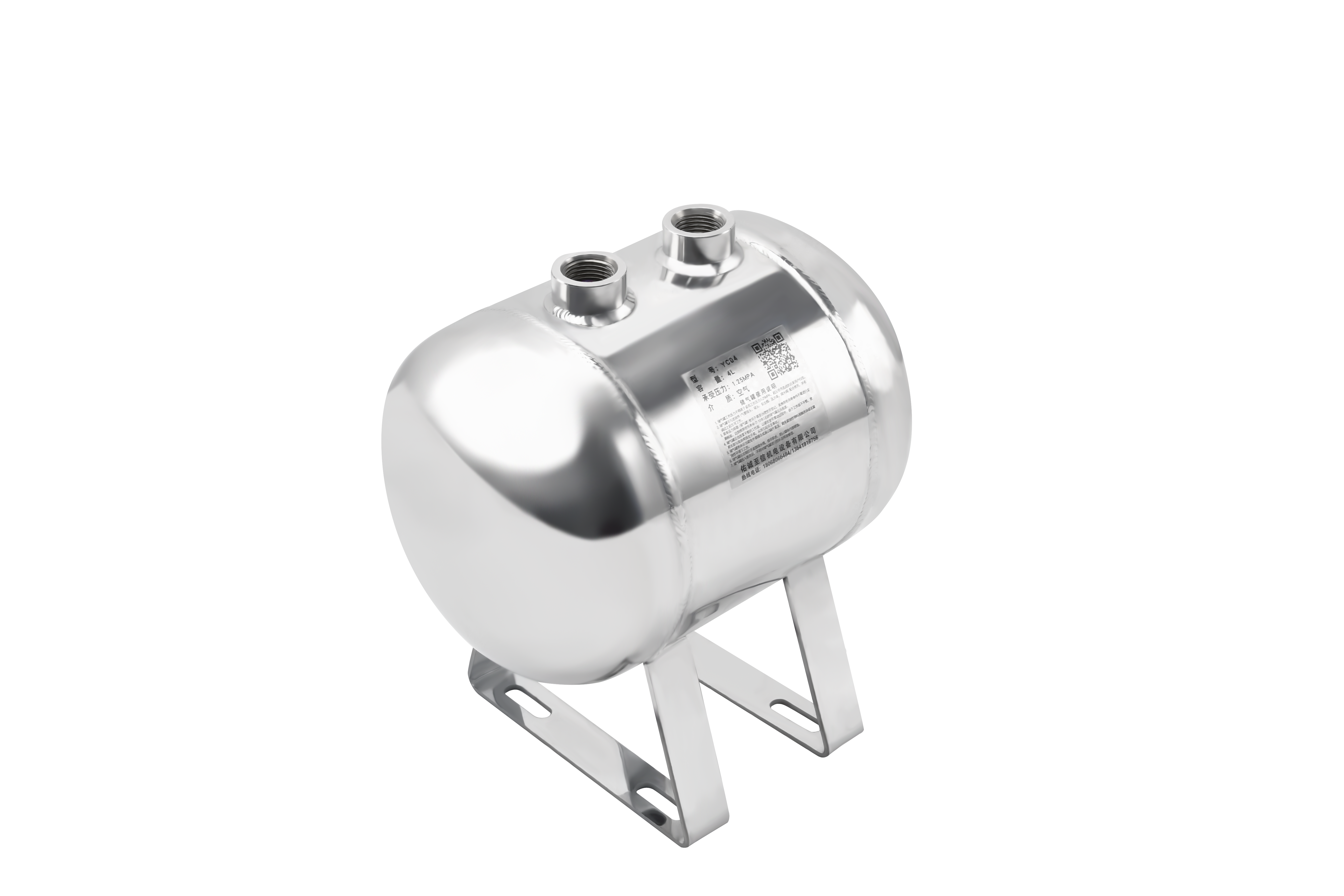
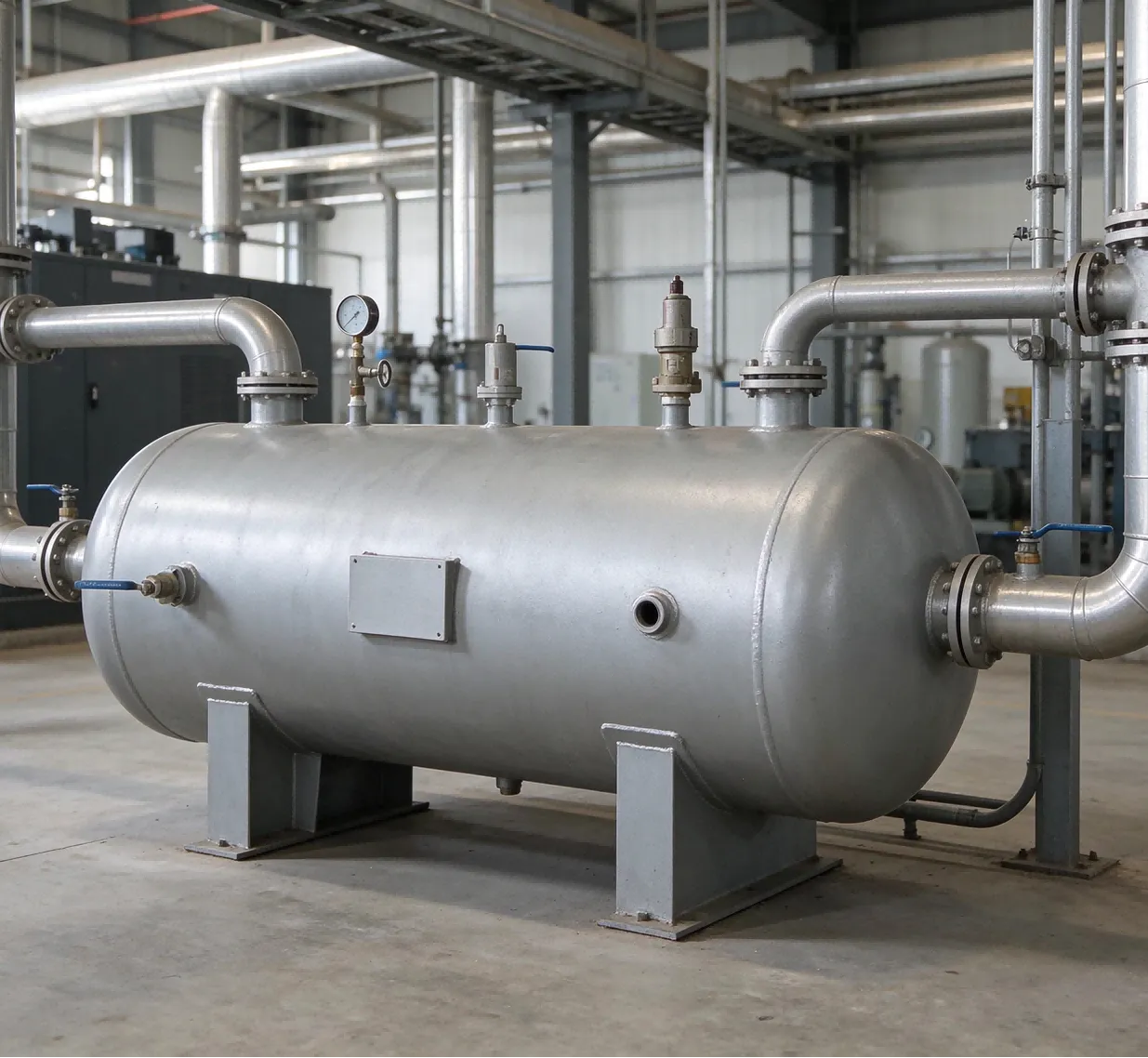
Horizontal receiver tanks are cylindrical with the axis horizontal and weight distributed along the length. Simple vertical legs would create large concentrated stress in the shell locally. Horizontal tanks therefore typically use saddle supports: curved cradles along the underside that conform to the shell, distributing load over a longer arc rather than concentrating it at a few weld points.
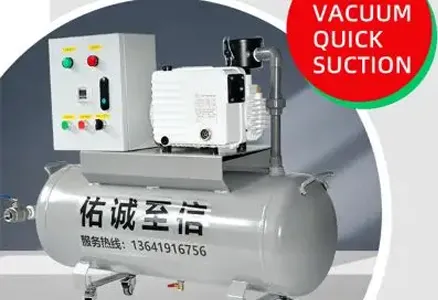
The number and spacing of saddles follow tank length and diameter — long tanks usually use two, very long tanks increase to three to limit mid-span deflection. Contact surfaces typically include a pad or liner to reduce local stress and ease welding; the base is then bolted to the foundation. This structure is especially convenient for compressor packages: the saddle can interface directly with the compressor skid, so tank and package ship and land as one unit.
3. Four Details Often Overlooked
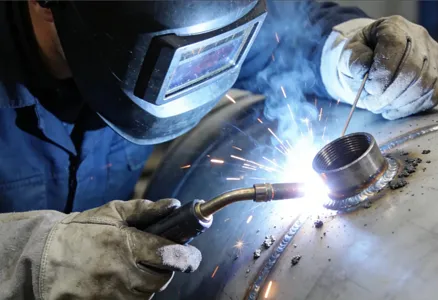
First, the leg-to-shell connection. Welding legs directly to thin shell walls creates stress concentration at the weld root. Proper practice adds pads between leg and shell with larger weld transition, so the thin wall is not loaded directly. Second, anchor hole matching. The center distance and diameter of base anchor holes must match the site foundation or skid; otherwise the site must re-drill or add adapter plates. Third, drain and service clearance. Support height must leave room to operate and remove the bottom drain valve and drain line; insufficient height makes later draining difficult. Fourth, fixing during transport. Vertical tank legs are a weak point in transit and need dedicated securing or temporary bracing to avoid deformation from vibration.
4. How YCZX Handles Support Matching
Supports are not standard parts. YCZX determines the support scheme by volume, installation form and the customer's package conditions. Small-to-medium vertical tanks ship with three-leg supports as standard; four-leg designs are used where ground conditions are complex or the height-to-diameter ratio is high, with reinforced pads at the leg-to-shell connection to reduce weld-root stress.
Horizontal tanks use saddle structures, with saddle count calculated from length and diameter, pads at contact surfaces and weld transitions. Anchor hole spacing and diameter on the saddle base are customized to the customer's foundation drawing or compressor skid, so the tank lands directly without on-site modification. Support height is reserved for minimum drain valve and drain line clearance. Before shipment, the tank and supports undergo hydrostatic testing together to confirm no abnormal deformation under pressure.
For export projects, supports are sandblasted and primed/painted along with the vessel, with anchor bolts and pads supplied as accessories; tanks are manufactured to ASME or PED standards, and support welding is included in quality control and documentation, avoiding a "compliant tank with arbitrary supports" situation. In transport, vertical tank legs receive temporary bracing or securing to reduce deformation risk in ocean and inland shipping.
5. Conclusion
Three-leg, four-leg and saddle supports have no absolute ranking — selection depends on tank volume, height-to-diameter ratio, installation environment, foundation and whether it ships with a compressor package. Small vertical tanks are economical with three legs; large, tall or complex installations are steadier with four; horizontal tanks distribute load over an arc through saddles to avoid local shell stress. Provide installation conditions, foundation dimensions and package interfaces at inquiry time, so the manufacturer can build the support correctly and drill the anchor holes right — and the tank can be used the moment it lands.Upholding sincerity and integrity, Youcheng Zhixin is worthy of your trust.