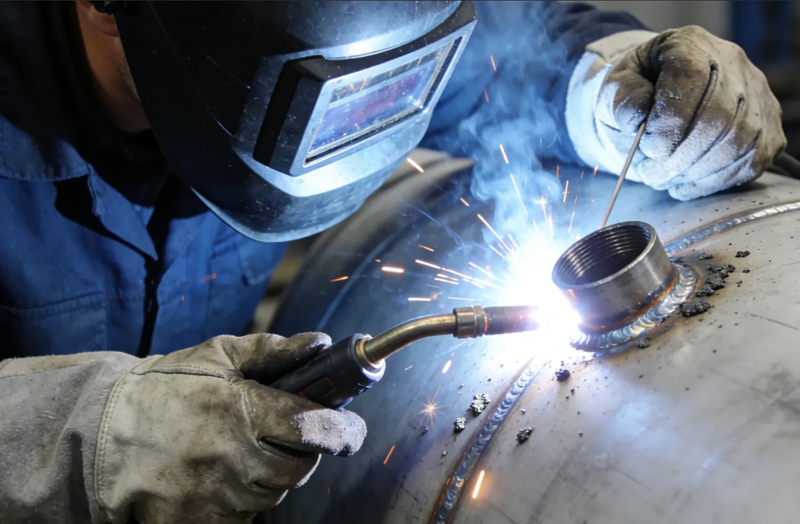
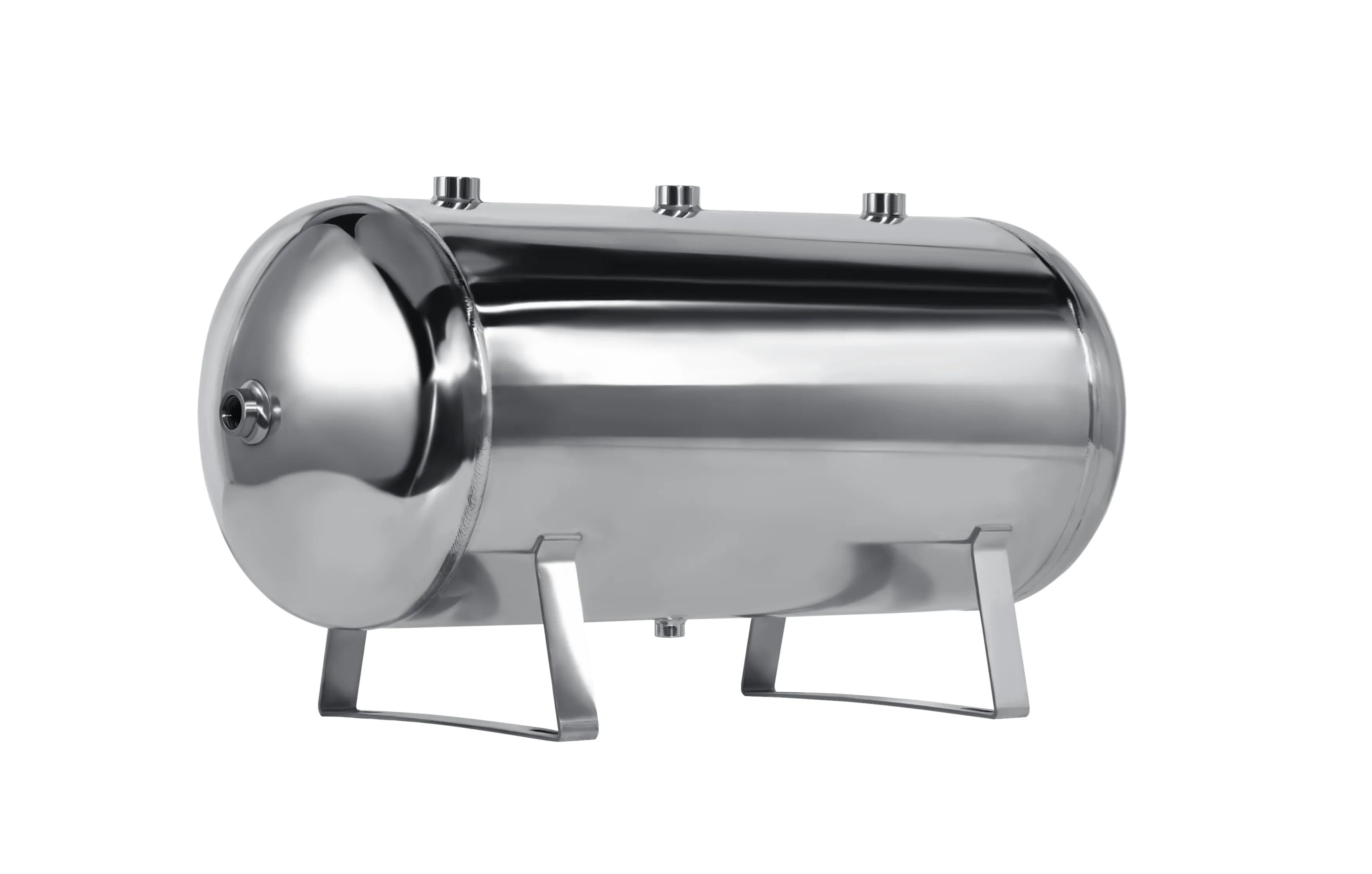
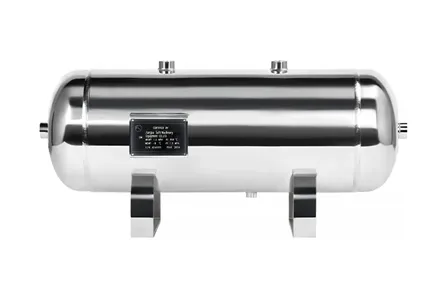
Argon arc welding (TIG welding) of air receiver tanks is a commonly used high-quality welding process in pressure vessel manufacturing, especially for stainless steel air receiver tanks.
The core technology uses argon gas to isolate air and a tungsten electrode to ignite the arc, achieving a low-spatter, high-density weld.
Pros and Cons of argon arc welding for air storage tanks
Pros:
1. Extremely high quality: Thorough argon protection results in welds free of oxidation, porosity, and slag inclusions, exhibiting excellent density and corrosion resistance, meeting the pressure and airtightness requirements of pressure vessels.
2. Beautiful: No spatter or slag, smooth surface, suitable for air storage tanks with high requirements for appearance and cleanliness.
3. Small heat-affected zone and controllable deformation: Concentrated arc heat and easily adjustable heat input result in low welding stress and deformation, suitable for thin plates and high-precision tanks.
4. Wide applications: adaptable to air storage tanks of different materials-carbon steel, stainless steel, aluminum alloys, etc, enabling all-position welding.
5. Good operational visibility: Open arc welding provides a clear molten pool, facilitating control of penetration and weld formation.
Cons:
1. Low efficiency and high cost: Shallow penetration and slow deposition rate result in lower production efficiency compared to CO₂welding and submerged arc welding; the high cost of argon gas and tungsten electrodes leads to an overall high cost.
2. High operational difficulty: Requires hand coordination (holding the welding torch and feeding the wire), demanding high welder skills and requiring a long training period.
3. Poor wind resistance: Argon gas is easily dispersed in open/ventilated areas, necessitating windproof enviroment; otherwise, protection will fail and defects will occur.
4. Current limitation: Tungsten electrodes have limited current carrying capacity; high currents can easily cause burnout and tungsten inclusions; thick plates require multi-layer, multi-pass welding.
Therefore, Argon arc welding is primarily used for stainless steel air storage tanks, and high-pressure/high-purity air receiver tanks which requires stringent weld quality and corrosion resistance.
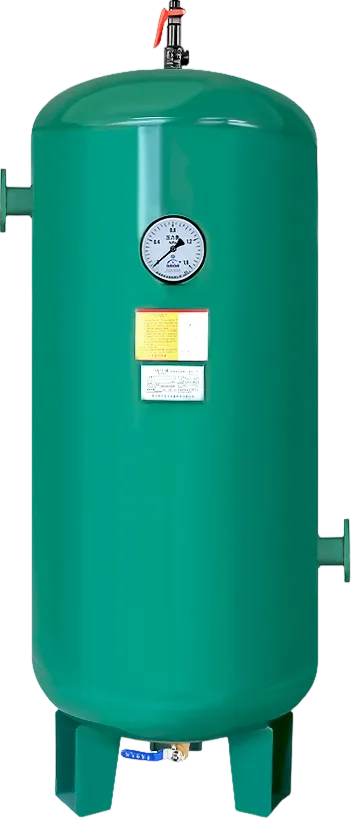
Carbon steel air storage tanks are typically welded primarily with CO₂welding, argon arc welding is only used at critical locations such as ports and flanges, balancing quality and cost.