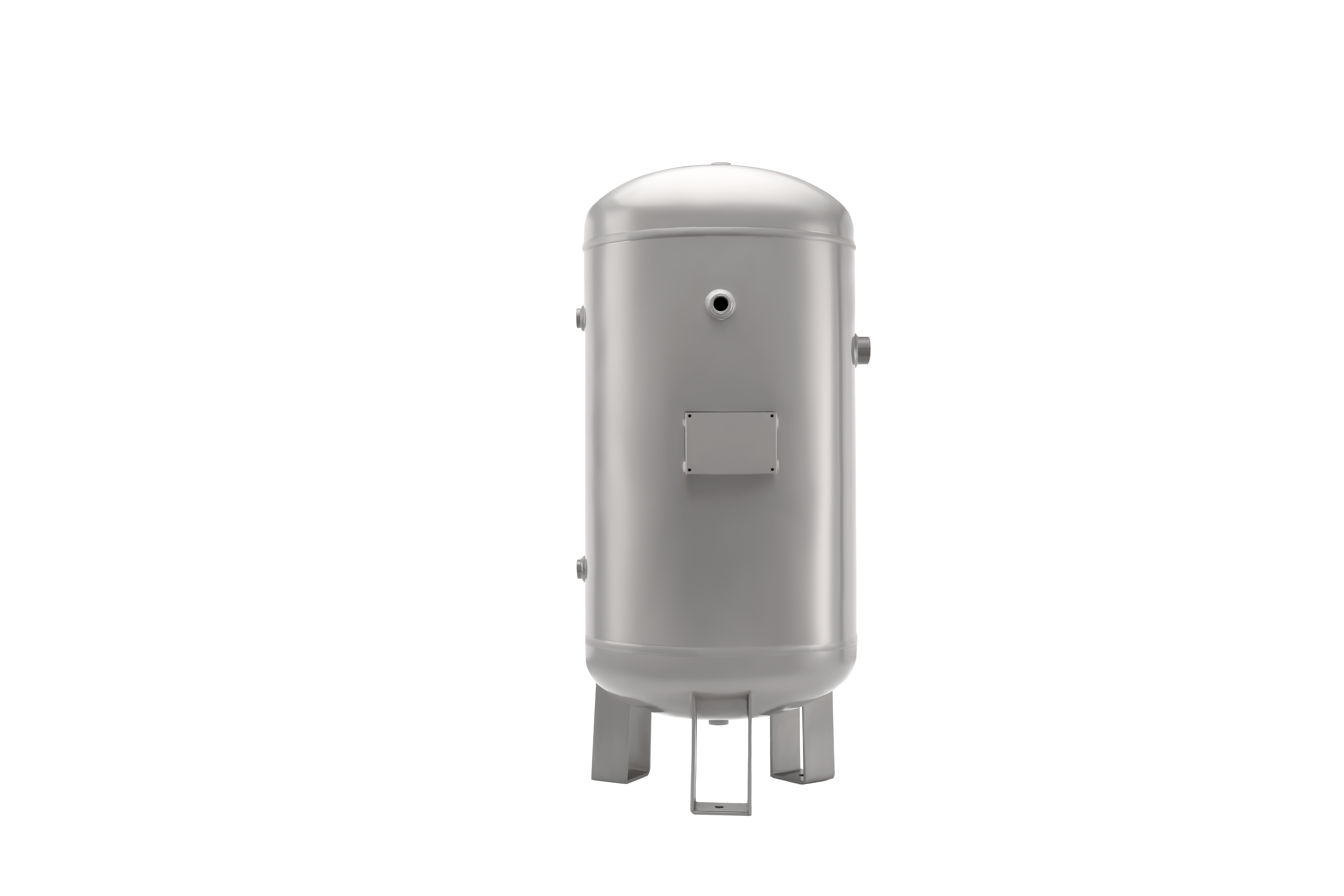
Stainless‑steel pressure vessels are essential assets for food‑processing, pharmaceutical, chemical, marine and high‑humidity industrial environments. Unlike carbon‑steel tanks, stainless‑steel units deliver inherent corrosion resistance, hygienic surface conditions and long‑term service life without heavy anti‑rust paint systems. Surface polishing is one of the most critical manufacturing factors for stainless‑steel vessels. Many international customers ask for achievable polishing standards during project quotation. At YCZX, our maximum mechanical grinding and polishing standard for stainless‑steel pressure‑vessel shells reaches 600‑grit finish, delivering smooth satin‑satin surfaces with excellent clean‑ability for diverse custom applications. This article outlines YCZX’s core strengths in custom stainless‑steel pressure‑vessel manufacturing, covering surface finishing expertise, material traceability, welding competence, full‑process quality control and global‑project service capacity.
Surface finish directly impacts corrosion‑resistance, hygiene performance and ease‑of‑cleaning for stainless‑steel pressure vessels. Coarse grinding below 240‑grit leaves deep surface scratches where moisture, particles and chemical residues can be trapped, accelerating local pitting corrosion. Higher‑grit polishing progressively removes coarse scratch marks, reduces surface roughness and minimises crevices for contaminants to accumulate. YCZX’s maximum mechanical polishing capability is 600 grit, which produces a fine, uniform satin finish with low surface roughness. It is important to clarify that 600‑grit mechanical polishing represents our practical production ceiling for complete pressure‑vessel shells. Higher mirror‑grade grit values beyond 600 are technically possible for small components, yet full‑tank 800‑grit or 1000‑grit mechanical polishing brings practical risks: excessive material thinning on thin‑wall pressure‑bearing shells, over‑heating during polishing, hidden dimensional deviation and higher probability of surface micro‑defects that may compromise vessel safety. Our multi‑step progressive polishing workflow strictly follows grit‑sequence rules without skipping abrasive grades. We remove weld discoloration and spatter first with coarse abrasives, then advance gradually through intermediate grits up to final 600‑grit finishing. Both outer surfaces and accessible inner zones are treated consistently. After polishing, passivation treatment is performed to rebuild the protective chromium‑rich passive film, further improving anti‑corrosion performance of the finished tank. This 600‑grit finish perfectly matches most food‑grade, sanitary‑adjacent, coastal and chemical‑buffer‑vessel project requirements worldwide.
Beyond professional polishing capacity, strict raw‑material management forms YCZX’s second major competitive advantage for custom stainless‑steel pressure vessels. We commonly process 304 and 316L stainless‑steel plate, the dominant grades for industrial pressure‑vessel applications. Every incoming batch is verified against mill test certificates to guarantee full material traceability. Unauthorised material substitution is strictly forbidden. Our engineering team carries out material‑grade consultation according to customer operating‑conditions: evaluating working pressure, operating temperature, chloride‑ion concentration, humidity and cleaning frequency. For salt‑spray coastal environments or mild chemical‑medium service, we will recommend 316L rather than ordinary 304 to resist pitting corrosion. When customers submit custom drawings or only describe on‑site operating parameters, we explain trade‑offs between material cost, wall‑thickness selection and surface‑polishing requirements, helping customers make balanced engineering decisions instead of over‑specifying unnecessary ultra‑high‑grit finishes that add cost without practical benefit.
Third, YCZX possesses mature welding expertise for stainless‑steel custom vessels, including challenging dissimilar‑metal welding between stainless steel and carbon‑steel components. Stainless‑steel welding is far more demanding than carbon‑steel fabrication: heat‑input must be tightly controlled to avoid chromium‑carbide precipitation and inter‑granular corrosion. Our welders hold valid qualification certificates. Welding‑procedure specification (WPS) documents are validated before production. We carefully handle longitudinal seams, girth seams and nozzle‑to‑shell joints. After welding, heat‑tint oxide layers from weld zones are completely removed before polishing commences. Poor weld cleanup will leave embedded oxidation defects that cannot be eliminated even by high‑grit polishing. Every weld receives visual inspection; selected critical joints undergo penetrant or radiographic non‑destructive examination. Each finished stainless‑steel custom vessel completes mandatory hydrostatic pressure testing to verify structural integrity and joint tightness. Defective semi‑finished work‑pieces are segregated for full rework before re‑inspection, and are never allowed to move forward along the production line.
Fourth, YCZX implements complete customisation flexibility and export‑oriented supporting services for stainless‑steel pressure‑vessel orders. We can produce vessels according to customer‑supplied drawings, or develop optimised designs based on customer‑provided operating‑condition data. Customisable parameters include tank volume, working‑pressure rating, shell diameter, port quantity and orientation, support‑bracket configuration, and surface‑finish requirements ranging from standard mill finish, intermediate 240‑grit / 320‑grit satin up to our maximum 600‑grit mechanical polish. After manufacturing and testing, stainless‑steel vessels receive special protective packaging to prevent surface scratching during ocean and land transit. Corner guards, stretch‑film wrapping and heavy‑duty strapping‑belts avoid polishing‑surface damage in long‑distance logistics. Our team prepares complete documentation packages including material certificates, welding‑records, non‑destructive‑test reports and hydrostatic‑test records to satisfy global import‑acceptance and regulatory‑filing requirements aligned with GB150 and ASME Section VIII Div.1 standards.
Many stainless‑steel vessel purchasers focus only on nominal material grades and advertised polish‑numbers. They overlook practical production limits, the risk of over‑polishing thin‑wall pressure‑bearing shells, weld‑zone preparation quality and complete traceability documentation. A high‑number grit rating on paper means nothing if welding‑heat tint remains under the polished layer, or material certificates cannot be provided. Reliable custom stainless‑steel pressure‑vessel performance comes from balanced engineering choices across material selection, welding control, realistic surface‑finish specification, multi‑stage inspection and export‑grade protection.
If you are sourcing custom stainless steel pressure vessels for food, pharmaceutical, chemical, marine or general‑industrial projects, YCZX stands ready to become your trusted manufacturing partner. Whether you require mill‑finish economy‑grade tanks, intermediate‑grit satin surfaces or our top‑level 600‑grit mechanically polished custom vessels, our technical sales and engineering team will review your specifications, clarify realistic surface‑finish boundaries, provide professional material‑selection guidance and deliver fully‑tested, documentation‑complete stainless‑steel pressure vessels. Choose YCZX for your next custom‑stainless‑steel‑vessel project and obtain safe, corrosion‑resistant, code‑compliant tanks built with full‑process quality assurance.