High-Quality RFQs Should Validate Capabilities, Not Just Compare Prices
When comparing air receiver tank manufacturers solely based on unit price, it's easy to overlook differences in engineering reviews, inspection scope, technical documentation, and batch consistency. Although air receiver tanks seem structurally simple, they must match the compressor system, working pressure, installation space, target market, and maintenance plan.
Before formally sending an RFQ, you can use the following questions to determine whether a supplier can support the entire project, rather than just quoting based on a drawing.
1. What design parameters are required from the buyer?
Competent suppliers will not only ask about capacity. Basic technical communication should typically include working pressure, design pressure, operating temperature, compressed medium, installation orientation, interface layout, installation structure, quantity, and target country. If the air receiver tank is to be integrated into OEM equipment, manufacturers should also evaluate available space and surrounding components.
If an air tank manufacturer quotes directly without confirming this basic information, the final price may not correspond to the product the buyer truly needs.
2. What standards, certifications, and target markets can be supported?
The applicable compliance path depends on the installation country and end customer requirements. European projects may require PED assessments and CE documents where applicable, while many North American projects specify ASME manufacturing. Other markets may have local registration, inspection, or documentation requirements.
Buyers should ask suppliers to explain their actual capabilities. For vague claims like "all international certifications can be provided," further confirmation is needed to ensure the specific air receiver tank, production site, and document package truly fall within the claimed scope.
3. How are materials and welding controlled?
Reliable receiver tank manufacturers should be able to explain material identification, incoming inspection, welding control, and traceability methods. Depending on the project, buyers may require material certificates, confirmation drawings, welding records, or inspection documents.
These documents are not intended to add formal burdens but to prove that the physical products match the confirmed design and ensure that future repeat orders can be stably produced using the same process.
4. What tests will be conducted before shipment?
Buyers should confirm which tests are adopted for specific air receiver tanks, who records the results, and how the corresponding products are identified. Common items may include dimensional inspections, weld inspections, pressure tests, leak checks, surface inspections, accessory confirmations, and final document reviews.
The test pressure, medium, acceptance criteria, and records should be determined according to applicable design and project requirements, and it cannot be assumed that all air receiver tanks adopt the exact same testing process.
5. Can capacity, interfaces, and installation structures be customized?
For OEM equipment, standard air receiver tanks may result in additional piping, bracket modifications, or space conflicts. Buyers should confirm whether suppliers can adjust diameter, length, orientation, connection type, interface position, drain outlet, feet, brackets, or base plates.
A reasonable customization process should include drawing reviews, manufacturability feedback, and written confirmation before production. For first-time developed designs, buyers should also inquire whether samples or first-piece confirmations can be conducted.
6. What documents will be provided upon order delivery?
Document | Reason for Buyer Concern |
Confirmation Drawings | Confirm dimensions, interfaces, and installation structure |
Material Information | Support material verification and traceability |
Pressure/Leak Test Records | Proof that agreed tests have been completed |
Inspection Report | Record dimensions and final inspection results |
Nameplate Data | Correspond physical products with technical identity |
Compliance Documents | Meet applicable standards or market requirements |
7. How is delivery time and repeat orders controlled?
Delivery time is affected by material supply, drawing confirmation, certification path, tooling, testing, and order quantity. Rather than a delivery date without explanation, buyers should require suppliers to provide a key milestone plan. For repeat orders, confirmation of drawing version, revisions, tooling, and inspection standards is needed.
When air receiver tanks become long-term components in the buyer's product line, stable and consistent repeat production capability is often more important than minor price differences of the first order.
Practical RFQ Checklist
· Capacity and working pressure
· Design temperature and compressed medium
· Material and surface treatment
· Horizontal or vertical installation
· Interface size, position, and thread/flange type
· Installation structure and available space
· Applicable standards, target country, and document requirements
· Quantity, target delivery time, and drawing files
Conclusion
The most suitable supplier is not necessarily the one who responds the fastest, but the one who actively identifies missing information, explains compliance paths, confirms inspection scope, and translates buyer equipment requirements into controllable production plans.
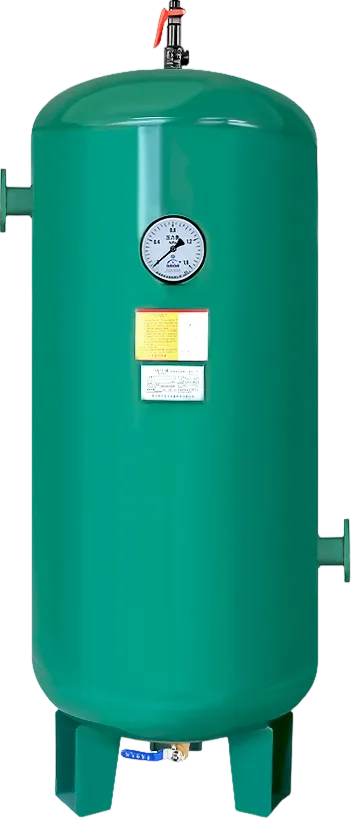
YCZX can provide industrial air receiver tanks, including carbon steel, stainless steel, standard and custom configurations, suitable for compressor systems and OEM equipment. A complete RFQ helps both parties reduce repeated modifications and ensures quotes are based on the same technical scope.
Frequently Asked Questions
Is it necessary to provide drawings before quoting?
Providing drawings for non-standard projects is more efficient, but a clear specification sheet can also start the review, followed by suppliers completing production drawings.
Can the same supplier directly interchange quotes for CE/PED and ASME air receiver tanks?
Suppliers can provide both types of products, but the design, evaluation, and document path for each project should be confirmed separately.
What is the biggest warning sign when screening suppliers?
Quoting directly without asking about pressure, medium, material, target country, and certification requirements usually indicates that the technical scope may not be fully understood.