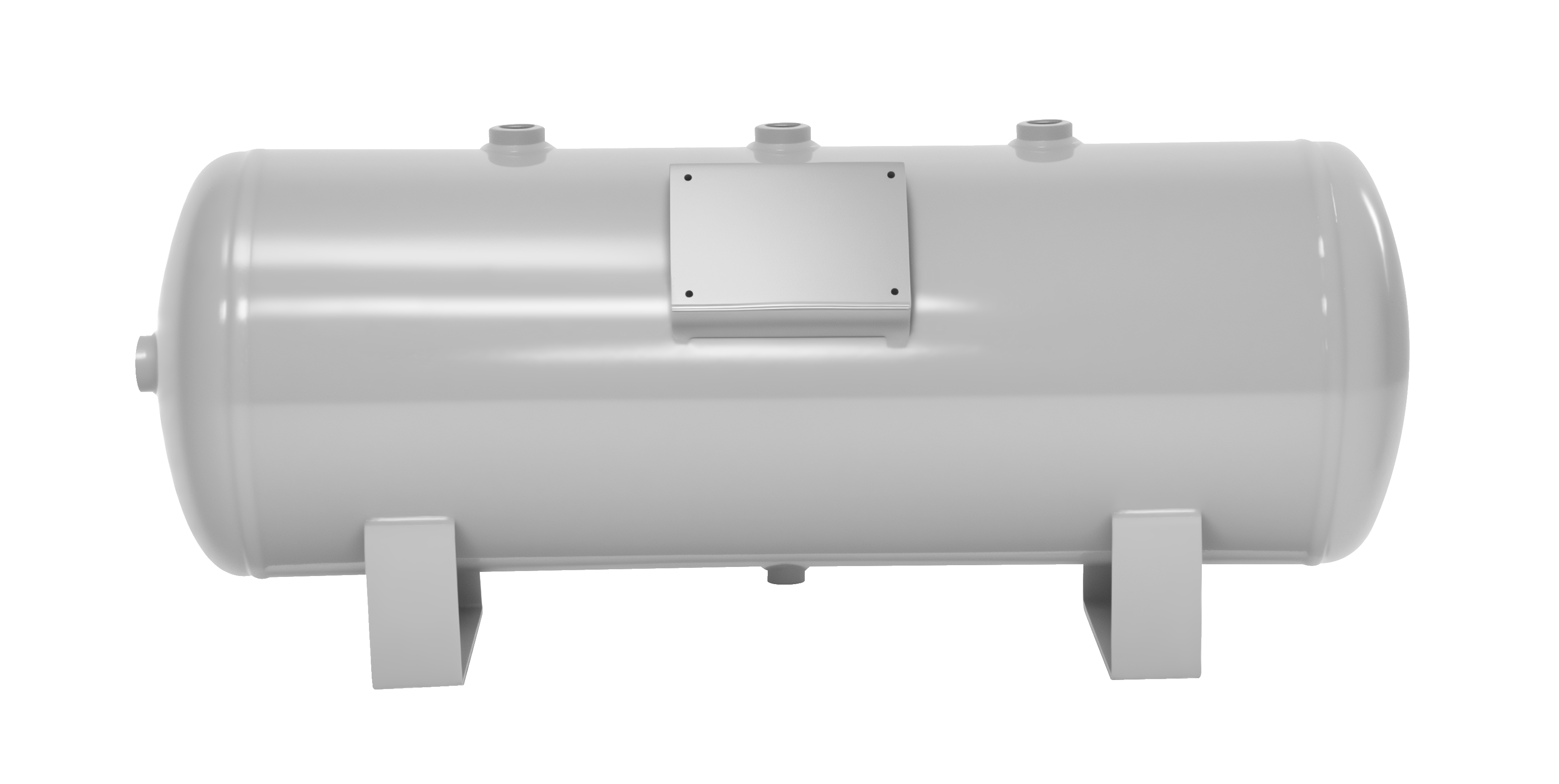
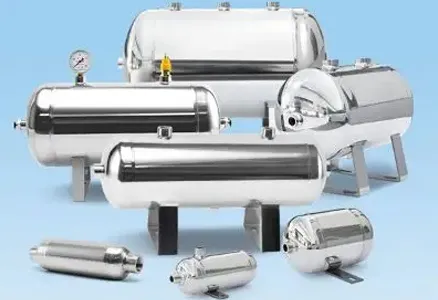
Standard (normal) packaging for air receiver tanks (compressed air storage vessels) follows industrial export norms, focused on anti-collision, moisture-proofing, and secure fixation. Below are the most common packaging methods used for air receiver tanks:
1. Standard Export Packaging (Most Common)
Inner Protection → Outer Crating/Palletization
Surface Wrapping:
Full coverage with plastic bubble film or PE stretch film to prevent scratches and moisture.
All openings (flanges, nozzles, safety valve ports) are sealed with plastic caps/plugs and wrapped to avoid dust/water.
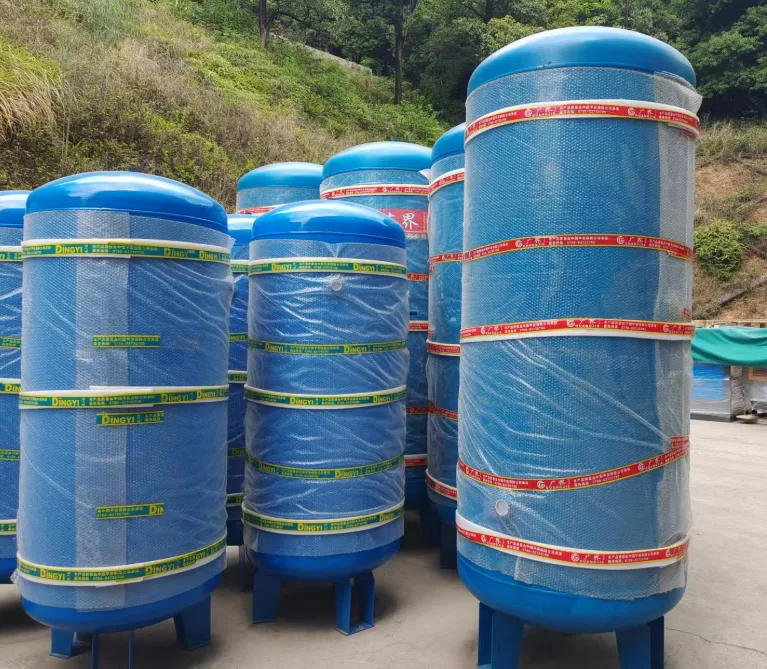
Outer Packaging (by size/weight):
Small Tanks (<500L): Plywood case / Wooden crate (1 unit per crate).
Medium/Large Tanks (≥500L): Steel pallet / Wooden pallet with fixed bracing.
Heavy/large tanks: Steel frame crating with cross-bracing; temporary saddles for horizontal tanks.
Fixation:
Secured to pallets/crates with steel bands, wire ropes, or bolts to prevent shifting.
Rubber/padding between tank and frame to avoid paint damage
2. Bulk Packaging (LCL/FCL Shipments)
Multi-unit palletization: Several small tanks stacked on a single pallet, wrapped together with stretch film and steel strapping.
Frame grouping: Custom steel frames holding multiple tanks for container loading, maximizing space.
Small tanks: Plywood case + bubble wrap.
Medium/large tanks: Steel/wooden pallet + stretch wrap + steel strapping.
All: Sealed openings + moisture barrier + secure fixation.