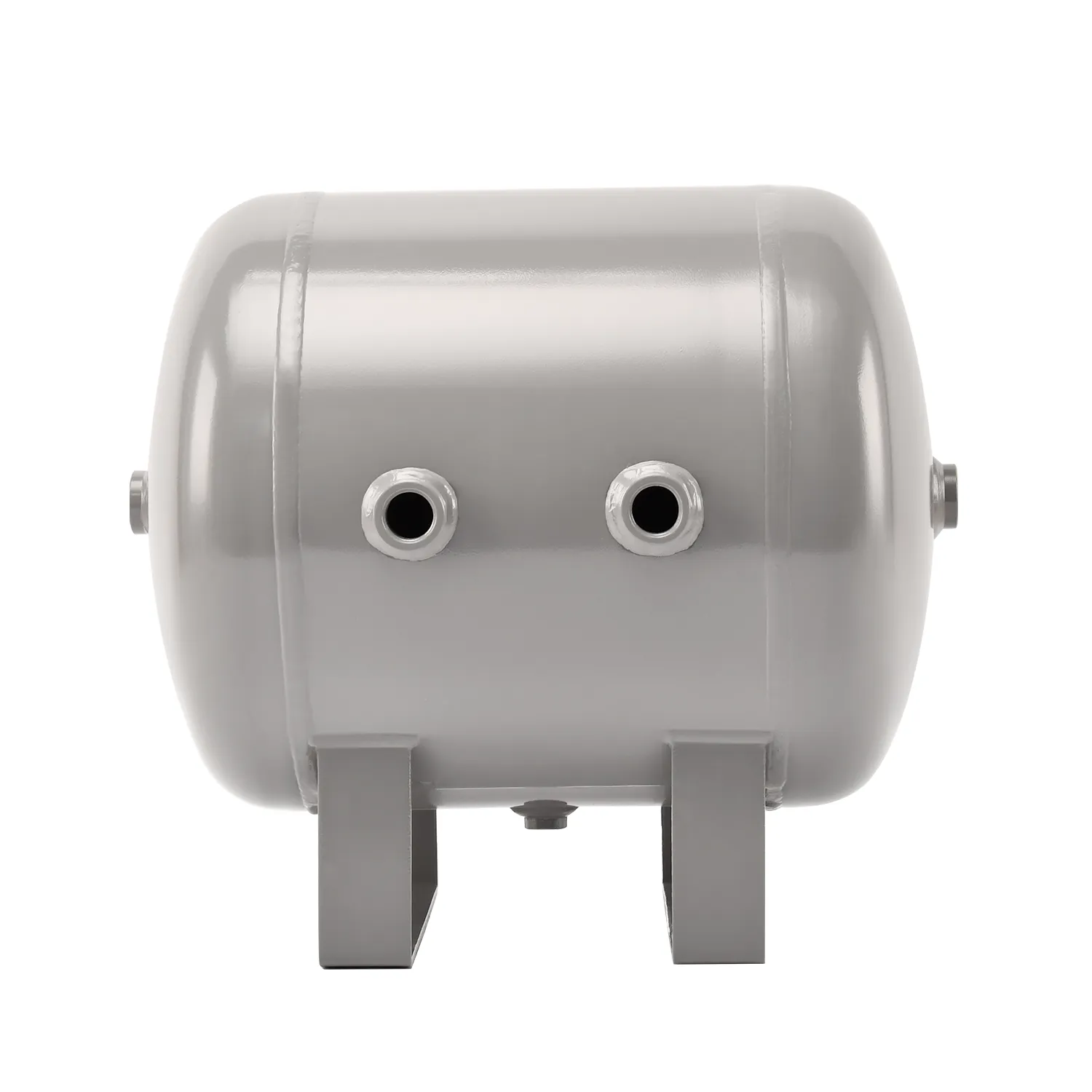
For pressure‑vessel products such as industrial air receivers, the overall structural safety largely depends on the quality of circumferential girth welds. Before formal automatic girth welding, tack‑welding (spot positioning welding) serves as an indispensable pre‑welding preparation procedure. Its core function is to fix the butt‑joint position of rolled cylinder shells, stabilize welding gaps, prevent seam shifting and misalignment during subsequent high‑speed automatic welding, and reduce the probability of costly welding defects including incomplete fusion, root voids, offset weld beads and local stress concentration.
If tack‑welding operations are non‑standard, even high‑end automatic gas‑shielded welding equipment cannot compensate for poor assembly quality. Uncontrolled gaps, offset edges or deformed cylinder shells will directly lead to non‑passing rates in radiographic non‑destructive testing, trigger re‑welding work, extend production cycles and raise overall manufacturing costs. In severe cases, hidden structural risks will remain inside finished tanks, threatening long‑term safe operation under cyclic pressure loading.
At YCZX, we attach great importance to every upstream manufacturing link. Our in‑house standardized tack‑welding work instruction strictly regulates fixture operation, gap correction, welding parameter setting, spot‑point layout, workpiece handling and site management. Every operator receives systematic pre‑job training and strictly follows documented process requirements. By controlling quality at the source of cylinder assembly, we create qualified pre‑conditions for follow‑up automatic girth welding, surface grinding, non‑destructive inspection and pressure tightness test, ensuring every air receiver meets GB150, ASME Section VIII Div.1 and other international pressure‑vessel standards for global industrial‑sector clients.
Step 1: Load and clamp cylinder shell
The first critical phase of tack‑welding is stable mechanical positioning of rolled cylinder shells. Operators place the pre‑rolled cylindrical shell onto the dedicated material rack, then toggle the fixture switch to the right‑hand side to activate mechanical clamping force. Operators need to fine‑tune the angular position of the cylinder shell manually, making certain that the longitudinal butt‑welding seam faces straight upward for convenient observation and operation.
After clamping, visual inspection is mandatory. Operators must double‑check fixture tightness to confirm zero slipping risk during welding. The cylinder shell must remain perfectly centered within the fixture. If the shell is placed off‑center, uneven clamping force will push the cylinder sideways, generating seam offset and angular misalignment. Once misalignment occurs at this stage, subsequent tack‑weld spots will lock in assembly errors, which cannot be fully eliminated even during formal welding. Good fixture positioning lays the foundation for uniform gap distribution over the full‑length butt seam.
Step 2: Correct butt‑weld gap
Even precisely rolled steel shells may produce uneven local gaps after being loaded into fixtures. Therefore gap calibration is a necessary manual correction step. Maintaining the seam facing upward, operators use a hand hammer to tap along the butt joint from left to right, adjusting the joint clearance section by section. Operators observe seam width continuously while tapping, until the entire longitudinal butt seam achieves consistent gap dimension along its full length.
Operation discipline is strictly enforced at YCZX. Hammer striking force must stay moderate and controlled. Violent heavy blows are strictly prohibited. Over‑impact will create local dents, permanent plate deformation or thin‑wall damage on cylinder shells. Any surface indentation will become a stress‑raising point under internal working pressure, weakening the fatigue resistance of the whole tank. After gap adjustment, operators visually scan the full seam again to verify flatness and uniformity before moving on to formal tack‑welding.
Step 3: Perform tack‑welding
Welding‑parameter stability is vital for consistent tack‑weld quality. According to YCZX standard process specification, the machine is preset with fixed parameters: welding current 208 A, voltage 24.7 V, matched with 1.0 mm diameter solid welding wire. Welding parameters are locked for batch production to avoid random adjustment by operators.
Operators take the welding torch mounted on the right side of the welding station and trigger the torch switch to complete positioning spot welds. Normally four equally‑spaced tack‑weld points are distributed along the butt seam. For extra‑long cylinder shells which tend to deform more easily under internal stress, additional intermediate tack points can be added to enhance positioning rigidity.
One key rule is emphasized throughout our workshop: the clamping fixture must stay fully engaged until all tack‑weld spots are completely finished. Releasing clamping force halfway will release residual forming stress stored in rolled steel plates, causing the butt seam to spring open or shift sideways. If seam offset happens at this stage, existing tack points will create locked‑in assembly defects which require chipping away the spot welds and repeating the whole positioning procedure, wasting material and working hours.
Step 4: Unload cylinder and clean workstation
Upon finishing all tack‑weld spots, operators toggle the fixture switch to the left‑hand position to release mechanical clamping pressure. Cylinder shells shall never be pulled or dragged out of the fixture. Operators support both ends of the cylinder shell with both hands and lift it out gently. Finished pre‑welded shells are stacked in neat separated layers. Heavy‑weight stacking is forbidden. Rough handling actions such as dragging, throwing or dropping shells will scratch or dent the outer surface of pressure‑vessel steel plate, damaging base‑material integrity.
After finishing workpiece unloading, site house‑keeping work is required. Operators return welding torches, hammers and other hand‑tools to designated storage positions. All welding slag, metal spatter debris and leftover fragments are cleared away from fixtures, material racks and work benches. A tidy workstation reduces foreign‑body risks for subsequent batches and extends service life of production equipment. Good on‑site management is part of YCZX’s full‑range quality‑control culture.
Many customers focus their attention on final test results such as radiographic inspection and air‑pressure leak testing. However, YCZX believes high‑quality pressure vessels originate from tight control of every intermediate production procedure. Standardized tack‑welding effectively eliminates assembly‑related defects before formal girth welding starts. Every detail including fixture clamping, gap correction, fixed welding‑parameter execution, spot‑point layout, gentle workpiece handling and workstation cleaning is implemented according to formal documented work instructions.
This pre‑welding positioning procedure closely connects upstream plate rolling work and downstream automatic girth‑seam welding. Combined with incoming material inspection, surface grinding, non‑destructive testing, air‑pressure tightness test and standardized export‑grade pallet packaging, it forms YCZX’s complete closed‑loop quality‑management system. Every production step is traceable. We avoid hidden dangers caused by careless assembly work. By insisting on rigorous process control rather than only relying on post‑process defect detection, YCZX delivers reliable, long‑service‑life, code‑compliant air receiver tanks for global industrial users across machinery, energy, mining and general compressed‑air‑system applications.