Material Selection is More Critical in Sensitive Environments
In environments that are long-term humid, frequently cleaned, have a corrosive atmosphere, or have high pollution control requirements, stainless steel air tanks are often more worth considering than ordinary painted carbon steel. Stainless steel can reduce the risk of rust and decrease coating maintenance, but it does not automatically make the entire compressed air system meet hygiene standards or direct product contact requirements.
Food and pharmaceutical projects must evaluate the entire air path, including compressor type, dryer, filter, piping, condensate management, and end treatment. The air tank should serve the entire system strategy.
What is the Difference Between SS304 and SS316L?
SS304 is widely used in industrial equipment and has good corrosion resistance in many indoor environments. SS316 or 316L contains molybdenum and is usually preferred in chloride, cleaning chemicals, or more corrosive environments.
The correct grade depends on the actual medium and environment. Purchasers should provide humidity, temperature, flushing methods, chemical exposure, and surface treatment requirements. Lacking this information, simply specifying the most expensive grade may not solve the actual corrosion problem.
Which Environments Typically Consider Stainless Steel Air Tanks?
Environment | Reasons to Choose Stainless Steel | Issues Still to Confirm |
Food and Beverage Processing | Corrosion resistance, easier surface maintenance | Does compressed air directly or indirectly contact the product? |
Pharmaceutical or Laboratory Equipment | Reduces rust risk near sensitive equipment | What air quality and validation requirements apply? |
Wash Production Areas | Better withstands repeated external wetting | What cleaning agents and temperatures are used? |
Coastal or High Humidity Environments | Better corrosion resistance compared to ordinary painted steel | Is chloride exposure significant? |
Chemical or Process Equipment | May better meet local environment compatibility requirements | What steam, splashes, or condensate are there? |
Internal Surfaces and Drainage are Equally Important
For stainless steel air receivers, a project may specify internal surface treatment to reduce roughness, facilitate cleaning, or reduce residue accumulation. Surface treatment should correspond to actual process needs and clarify how to measure and record, rather than just pursuing appearance.
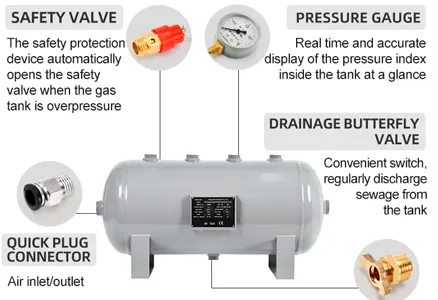
Drainage remains very important. Even the smoothest surface cannot compensate for unreasonable drainage port positions or the problem of the system continuously delivering moist air to the air tank. The lowest point, drainage interfaces, automatic drains, and maintenance space should be evaluated together.
Interfaces, Dead Ends, and Cleaning Space
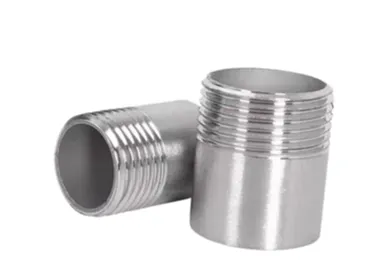
Stainless steel air reservoirs installed near sensitive processes may require more reasonable interface positions, smooth transitions, and compatible accessories. Excess cavities may accumulate condensate or increase cleaning difficulty. If the air tank needs to be flushed, inspected, or sanitized, it should be clearly proposed before design completion.
The compatibility of connector materials and seals is equally important. Even if the tank is stainless steel, mixing incompatible components may lead to corrosion or contamination risks.
Stainless Steel Air Tanks Cannot Solely Define Air Quality
Compressed air quality is determined by the entire system. Oil, water vapor, particles, and microorganisms need to be jointly controlled through compressor selection, drying, filtration, piping, and operational management. Air tanks can stabilize pressure and store air but should not be promoted as standalone guarantees of "food-grade" or "pharmaceutical-grade" air.
Clarifying this can avoid excessive selection and help the engineering team find the links that truly need control.
What Information Should be Included in an RFQ?
· Working pressure, temperature, and required capacity
· SS304, SS316L, or performance material requirements
· Expected internal and external surface treatment
· Cleaning methods, chemicals, and flushing frequency
· Interface layout, drainage, and inspection space
· Air quality grade or terminal process requirements
· Applicable specifications, target market, and document requirements
YCZX Stainless Steel Air Tank Solutions
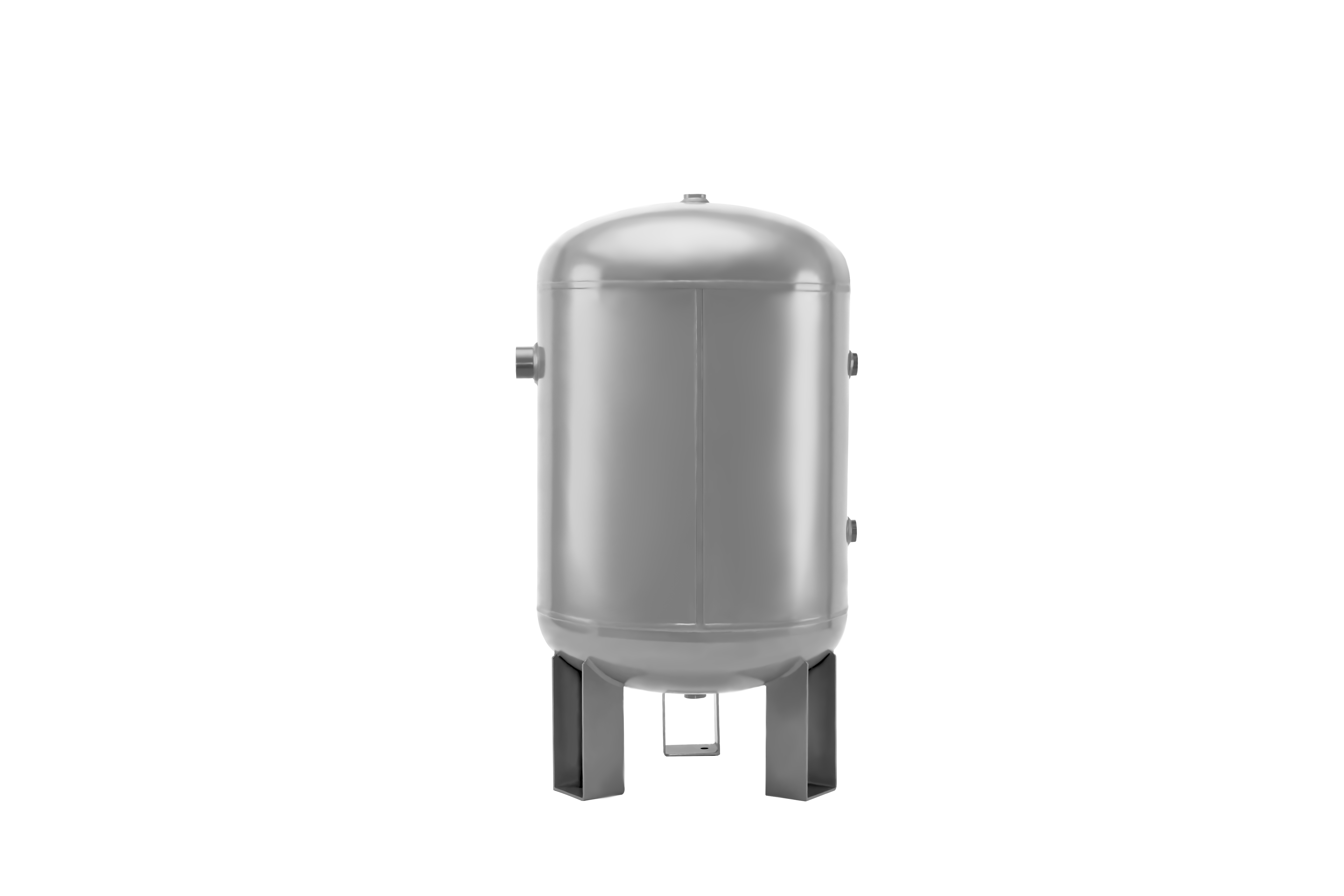
YCZX can manufacture stainless steel air tanks, supporting standard and custom configurations. Size, orientation, interface position, mounting structure, and surface treatment can be evaluated according to the project. Purchasers should fully describe the environment to allow for a joint review of materials and design.
Frequently Asked Questions
Does Food Application Necessarily Require SS316L?
Not necessarily. Choice depends on exposure, cleaning chemicals, corrosion risk, and user specifications. Some projects can use SS304, while others require SS316L.
Can Internal Polishing Make Compressed Air Sterile?
No. Polishing aids in cleaning and maintenance, but sterility and air quality depend on the entire system and operational control.
Can Stainless Steel Air Tanks Still Corrode?
Yes. Chlorides, crevices, incompatible chemicals, manufacturing issues, or contamination can all cause corrosion, so grade and structural design remain important.
Conclusion
The value of stainless steel is maximized only when it addresses specific environmental or process risks. Grade, surface, drainage, and interfaces should be selected as a system, then confirm how the entire compressed air setup controls moisture, oil, particles, and microorganisms.