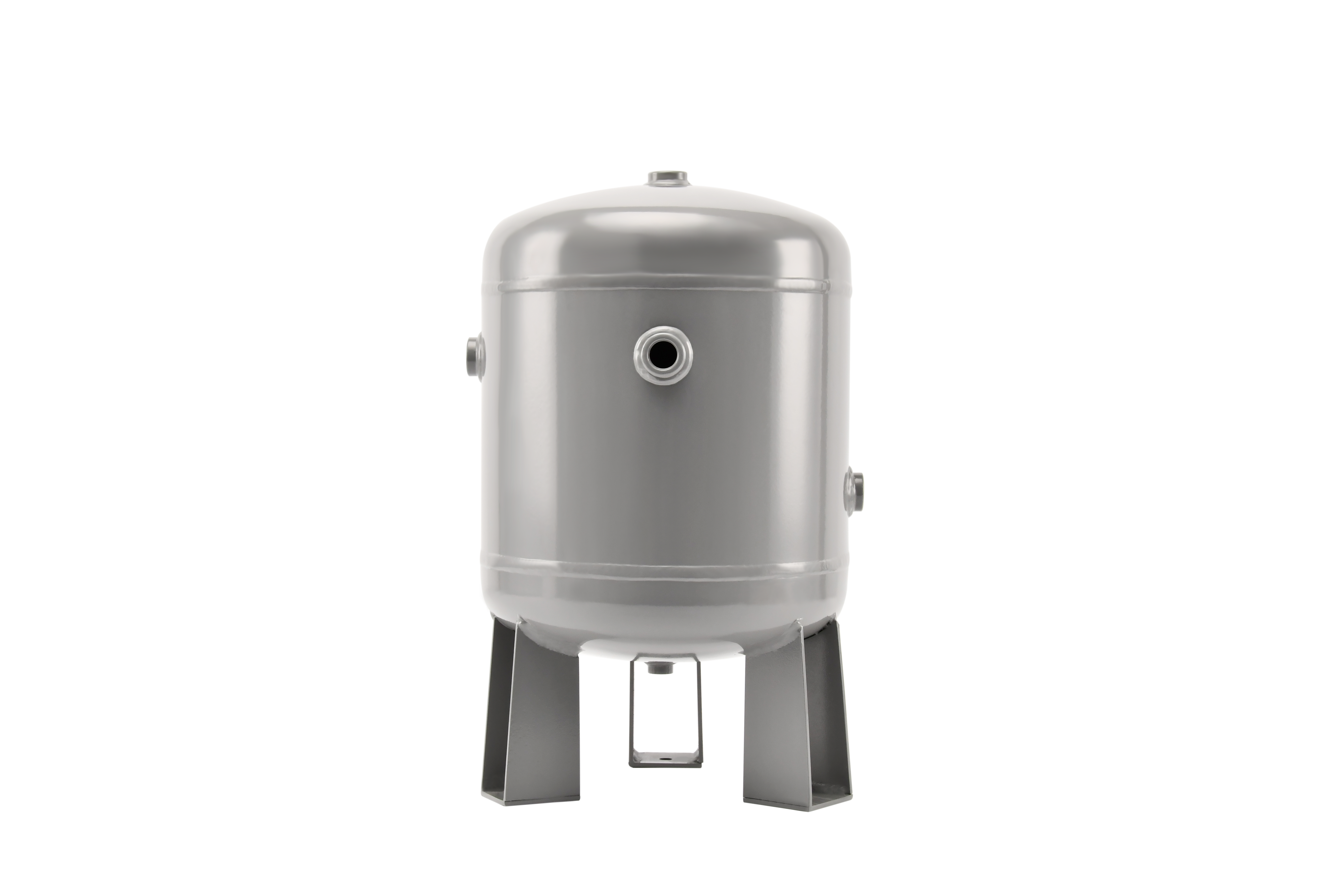
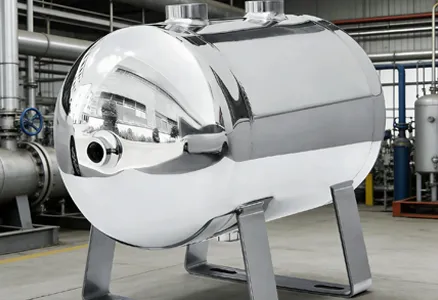
Industrial air storage tanks are the silent backbone of every compressed air system. Working alongside air compressors, dryers, and filters, they stabilize system pressure, buffer air flow fluctuations, separate moisture and oil impurities, and extend the service life of entire air supply equipment. Many factory operators and engineering buyers often focus only on compressor parameters while ignoring tank quality. In fact, a substandard air tank will lead to unstable air pressure, frequent equipment failures, high maintenance costs, and even serious industrial safety accidents.
High-quality industrial air storage tanks are not simple steel containers. They are standardized special pressure vessels that integrate professional structural design, precision manufacturing, strict pressure testing, and anti-corrosion technology. For manufacturing plants, engineering contractors, and international industrial equipment purchasers, understanding the core standards of high-performance air tanks is the key to optimizing system efficiency and eliminating safety hazards.
The Indispensable Role of Air Storage Tanks in Industrial Compressed Air Systems
In all industrial production scenarios that rely on compressed air, including machinery manufacturing, chemical processing, food packaging, pharmaceutical production, mining, and new energy industries, air storage tanks undertake three core irreplaceable functions.
First, pressure stabilization and flow buffering. The air output of the air compressor is intermittent and unstable. The air tank stores compressed air in real time and balances instantaneous air consumption fluctuations of production equipment, avoiding frequent start-stop of the compressor and ensuring stable air pressure for precision production processes.
Second, primary gas purification. During compressed air operation, a large amount of water vapor, oil mist, and dust will be generated. When high-pressure air enters the tank for standing and deceleration, most liquid water and oil impurities will settle at the bottom of the tank, realizing primary purification and reducing the working pressure of subsequent dryers and filters.
Third, system safety protection. As a pressure-bearing buffer device, the air tank can effectively reduce the pressure load of the compressor pipeline. Equipped with standard safety valves and pressure gauges, it can release excess pressure in time to prevent pipeline burst and equipment overload risks, ensuring the safe operation of the entire compressed air station.
Core Parameters That Define Industrial Air Tank Quality
When purchasing and customizing industrial air storage tanks, buyers need to focus on five core technical parameters that directly determine tank performance and service life, avoiding being misled by low-price and low-quality products.
1. Working pressure and volume matching
Conventional industrial air tanks cover pressure grades of 0.8MPa, 1.0MPa, 1.3MPa, 1.6MPa and above, with volumes ranging from 100L to 10000L and customized larger specifications. The tank pressure must be 1.1-1.2 times the maximum working pressure of the matching compressor to ensure safe margin. Blindly pursuing low pressure or mismatched volume will cause system pressure insufficiency or frequent equipment overload.
2. Raw material steel grade
Formal high-quality air tanks adopt national standard carbon steel Q245R/Q345R pressure vessel special steel plates, which have uniform density, strong pressure resistance and good ductility. Inferior tanks use recycled steel or ordinary thin steel plates, which are prone to deformation, bulging and cracking under long-term high-pressure operation, bringing major safety risks.
3. Wall thickness and structural design
The tank wall thickness is strictly calculated according to pressure, volume and service environment. Professional manufacturers adopt one-piece rolling and arc transition design for tank heads, avoiding stress concentration. Weld reinforcement and structural optimization ensure the tank can withstand long-term cyclic pressure impact without damage.
4. Anti-corrosion and surface treatment standard
Industrial air tanks work in humid, dusty or corrosive environments for a long time. High-quality tanks adopt shot blasting rust removal (Sa2.5 grade) + anti-rust primer + weather-resistant topcoat double-layer protection, with uniform paint film and strong adhesion. Inferior products only use simple paint brushing, which is easy to peel and rust, leading to tank wall thinning and shortened service life.
5. Standard accessory configuration
Qualified air tanks are fully equipped with national standard safety valves, precision pressure gauges, automatic drain valves, manholes and zqnameplates. All accessories match the tank pressure grade, with sensitive pressure regulation and reliable drainage function, avoiding pressure failure and water accumulation corrosion.
Key Manufacturing Technologies Behind Durable Air Receiver Tanks
The performance gap between high-quality and ordinary air tanks mainly comes from manufacturing technology and quality control system. Formal pressure vessel manufacturers adopt full-process automated production to ensure product consistency and stability.
First, precision automatic welding technology. Advanced submerged arc automatic welding equipment is used for tank body and tank head welding, with uniform welding seam, deep fusion and no pores or cracks. All welding seams undergo 100% NDT non-destructive testing to eliminate welding defects fundamentally.
Second, strict hydraulic pressure test. Each finished tank will be tested with water pressure exceeding the rated working pressure by 1.25 times, maintaining pressure for a long time to check for leakage and deformation, ensuring the pressure bearing capacity meets the standard.
Third, integrated finishing process. After welding and pressure testing, the tank undergoes internal and external polishing, residual stress elimination and full anti-corrosion treatment. The internal wall is smooth without dead corners, which is convenient for impurity settlement and drainage, and prevents internal corrosion and scaling.
In addition, standardized production processes and complete quality inspection records ensure that each batch of air tanks has stable performance, uniform specifications and traceable quality, which is impossible for small manual processing workshops.
Industry-Specific Air Tank Solutions for Different Application Scenarios
Different industries have differentiated requirements for air storage tank specifications and treatment processes, and targeted customized solutions can maximize system operation efficiency.
For food, pharmaceutical and medical industries, oil-free and pollution-free air tanks are required, with internal mirror polishing and sterile anti-corrosion treatment to ensure compressed air meets food-grade and medical-grade purity standards.
For chemical, metallurgy and coastal enterprises, strong anti-corrosion customized tanks are adopted, with special anti-corrosion coating and sealed structural design to adapt to corrosive gas and humid salt spray environments.
For mining, engineering and mechanical processing industries, high-pressure and wear-resistant vertical and horizontal air tanks are equipped, with compact structure, strong impact resistance and convenient installation, adapting to harsh on-site working conditions.
For cross-border engineering and overseas projects, air tanks that meet ASME, CE PED and international pressure vessel standards are provided, with complete certification documents to ensure smooth customs clearance and local safety acceptance.
Final Tips for Long-Term Air Tank Operation & Maintenance
High-quality air storage tanks can serve 8-15 years with standardized operation and regular maintenance. Users only need to complete daily simple maintenance work to effectively extend the service life and maintain stable system performance.
First, drain water and oil regularly. Turn on the drain valve every day to discharge the settled water and oil impurities at the bottom of the tank to avoid internal corrosion and air quality deterioration.
Second, inspect accessories regularly. Check whether the pressure gauge, safety valve and drain valve work normally every month, and replace aging accessories in time to ensure sensitive and accurate pressure regulation and protection functions.
Third, conduct regular safety inspections. Cooperate with professional institutions for annual pressure vessel safety testing to eliminate potential safety hazards in advance.
Air storage tanks are the core safety and energy-saving components of industrial compressed air systems. Their quality directly affects production stability, equipment service life and factory operation safety. A high-quality industrial air tank is reflected in standard material selection, professional structural design, precision manufacturing technology, strict quality testing and industry-adaptive customized solutions.
When purchasing air storage tanks, industrial buyers should prioritize product quality, manufacturer strength and certification compliance, rather than blindly pursuing low prices. Choosing a professional and standardized pressure vessel manufacturer can provide long-term stable, safe and cost-effective air tank solutions for industrial compressed air projects, creating lasting value for enterprise production and operation.