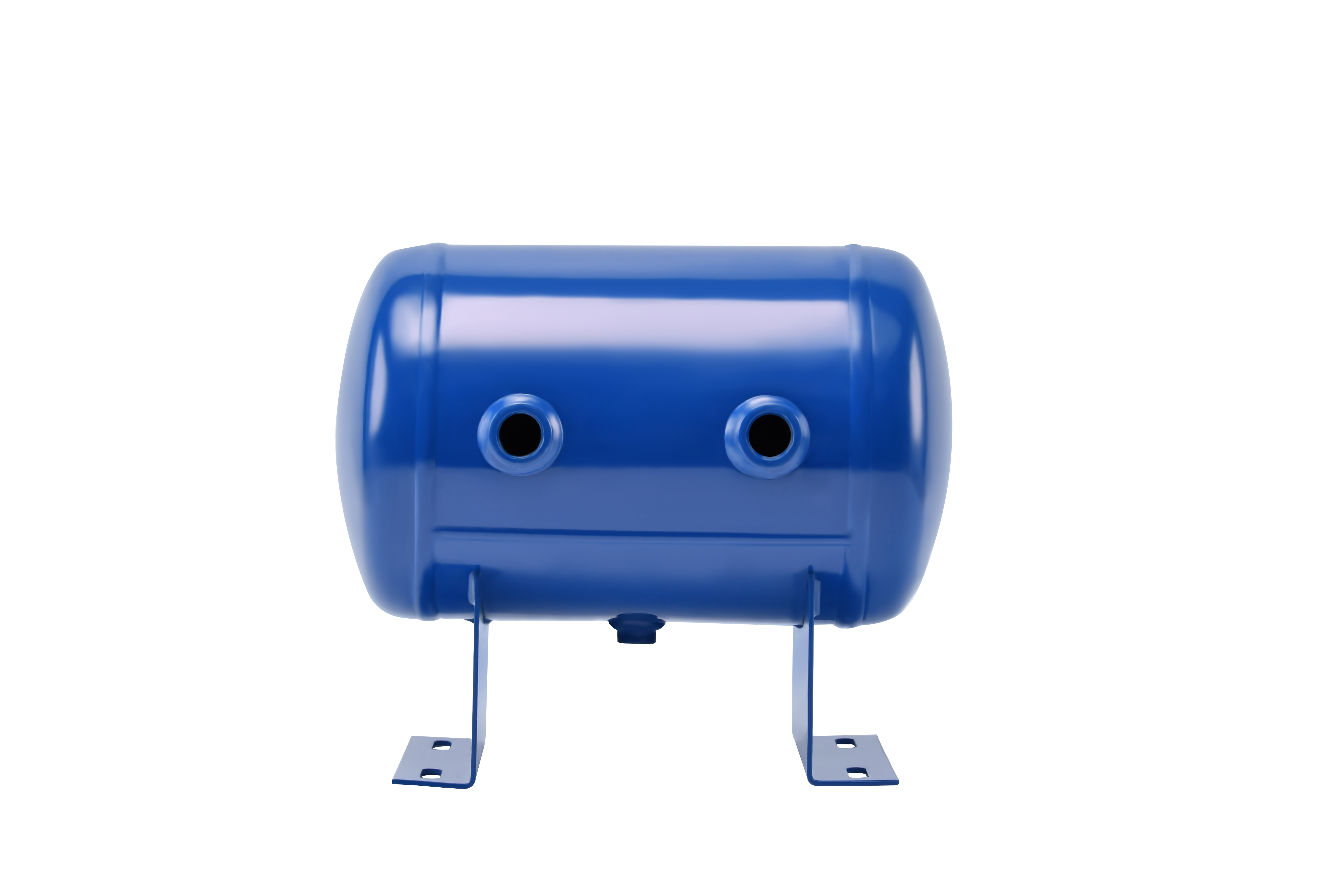
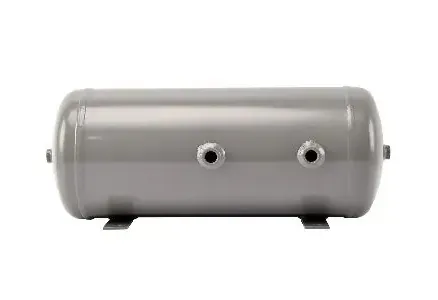
Shot‑blasting is an indispensable mechanical surface‑preparation process for custom‑built air receivers and pressure vessels, performed after welding and grinding operations and prior to anti‑corrosive coating application. High‑velocity steel‑shot impact removes mill scale, welding slag, rust spots and surface contaminants from tank shells, dished heads, support brackets and weld seams. It also generates a uniform micro‑rough anchor‑pattern texture on steel surfaces, which dramatically boosts the bonding strength of subsequent paint or powder‑coating layers, greatly extending anti‑corrosion service life under harsh operating environments such as high‑humidity workshops, coastal salt‑spray zones and outdoor installations.
Poorly‑executed shot‑blasting will bring multiple hidden risks. If threaded ports, threaded holes and sealing faces are not adequately protected, abrasive steel shots will scratch screw threads, block or damage precision connection openings, ruining the assembly performance of valves, pressure gauges and auxiliary fittings. Incomplete masking, unstable workpiece hanging, improper chamber operation or careless post‑blasting cleaning can leave steel‑shot debris trapped inside the pressure‑vessel cavity. Loose residual shots inside tanks may circulate within compressed‑air pipelines, damaging downstream pneumatic equipment. Many air reservoir tank manufacturers overlook detailed masking and safety protocols, focusing merely on visible outer‑surface cleaning. At YCZX, we implement a complete five‑step standardized shot‑blasting workflow for custom pressure vessels. Strict masking protection, secure hoisting, enclosed‑chamber operation and thorough post‑process inspection are fully documented. Our procedure safeguards precision threaded features, prevents foreign‑body contamination inside tank cavities, and delivers consistent surface quality compliant with international pressure‑vessel and coating standards for global custom‑order clients.
Step 1: Screw‑in plugging for all tank openings
Before placing workpieces into blasting equipment, operators carry out comprehensive plugging for every opening on the pressure‑vessel shell, including threaded ports, threaded holes, drain ports and other apertures. Matching‑specification bolts and sealing plugs are selected, aligned accurately with screw holes, and screwed vertically into position for full closure without exposed gaps.
Mandatory workshop rules govern this pre‑treatment phase. Operators must wear safety helmets throughout the masking workflow. Mismatched plugs are strictly forbidden. Every opening must be covered; no threaded hole can be omitted. Vertical screwing‑in prevents thread‑surface scraping and thread‑profile damage. After finishing plugging work, operators double‑check each fitting to confirm zero loose plugs and zero missed openings. This initial masking step forms the first defensive barrier to stop steel shots from striking and ruining critical threaded interfaces. For custom‑spec tanks with special‑size threaded holes for non‑standard accessories, every aperture is individually verified, rather than relying on routine mass‑production routines.
Step 2: End‑face sealing for connector joints
Special sealing protection is implemented for connector end faces, especially mounting‑plate lower joint surfaces which need full coverage without omission. RC‑type dedicated plugs are aligned and tightened to achieve complete sealing with zero exposed gaps. For FESTO booster tanks manufactured at YCZX, only RC‑form sealing plugs can be deployed; random makeshift blocking materials are prohibited, to eliminate any risk of thread gouging and deformation.
Connector end‑face protection is easily neglected yet highly meaningful. Even minor steel‑shot bombardment on joint sealing faces will create micro‑pits, impairing flatness and subsequently causing assembly leakage when field‑mounting valves and pipe fittings. Our standardized masking protocol protects not only threaded bores but also flat sealing surfaces, preserving dimensional integrity for later field assembly of custom‑built pressure‑vessel products.
Step 3: Workpiece hoisting and hanging preparation
Fully‑masked pressure‑vessel workpieces are firmly secured using professional lifting slings and hooks. Hanging points are carefully selected to guarantee full‑coverage blasting without blind spots on complex surfaces such as heads and support brackets. Operators position hooks at designated hoisting locations, adopt symmetrical hanging configurations, and keep the tank body horizontally balanced. Once hung, operators shake the workpiece slightly to confirm zero swinging or shifting.
Multiple safety constraints apply. Damaged lifting tools cannot be used for hoisting tasks. Eccentric hanging and attachment onto thin‑walled weak sections of shells are strictly prohibited. Operators are permitted to transfer workpieces only after stability has been fully confirmed. No personnel are allowed to stand within the hoisting operating zone to avoid collision injury risks. Secure symmetrical hanging keeps custom tanks rotating smoothly inside the blasting chamber, achieving uniform cleaning over irregular geometries including support‑bracket corners and dished‑head curved surfaces.
Step 4: Feeding workpieces into the shot‑blasting machine
The stably‑hung workpiece is transported and locked inside the enclosed shot‑blasting cabinet. Operators press the “up” control button to feed the tank into position, ensuring the workpiece engages with machine gear‑locking positions. The automated blasting cycle then commences for complete outer‑surface rust and scale removal.
Safety discipline is reinforced during machine‑running phases. While the shot‑blasting system is operating, operators must never open chamber doors or lean forward to observe internal processes. High‑speed flying steel shots inside the enclosed cabinet represent severe personal‑injury hazards. Our enclosed‑chamber setup also integrates dust‑collection and abrasive‑recycling subsystems, supporting eco‑friendly production conditions. Whether customers order small‑capacity compact tanks or large‑dimension custom pressure vessels, workpieces are correctly seated to avoid incomplete blasting zones.
Step 5: Workpiece removal, plug disassembly and quality check
Upon completion of the full shot‑blasting cycle, operators take out the finished tank, sequentially remove all installed bolts and sealing plugs, and place the processed workpiece neatly onto pallets. Components must never be set directly onto workshop floors. Operators handle plugs and bolts gently during disassembly so as not to bruise or scratch thread profiles.
A critical inspection focuses on cavity cleanliness. Operators carefully inspect tank interiors. If any steel‑shot particles have accidentally entered the pressure‑vessel cavity, thorough compressed‑air blowing‑out must be performed until all residual abrasive is completely cleared. Trapped steel‑shot fragments left inside finished tanks would constitute severe foreign‑object risks for end‑user compressed‑air systems. Operators also perform visual surface inspection to verify uniform blasting effect, no residual rust or mill‑scale patches, and no thread damage before releasing the workpiece to downstream coating stations.
Shot‑blasting is far more than simple rust‑removal cleaning work. Comprehensive opening masking, secure hoisting, safe enclosed‑chamber blasting and strict post‑blasting foreign‑object inspection collectively decide final surface quality and long‑term anti‑corrosion performance for custom‑built pressure vessels. Poor masking or careless post‑blasting cleaning will generate latent field‑failure risks that cannot be reversed by subsequent painting work.
YCZX does not treat shot‑blasting as a secondary auxiliary step. Every operation follows formal documented work‑instructions. This surface‑preparation procedure connects upstream welding‑and‑grinding workflows and downstream powder‑coating processes. Together with raw‑material incoming inspection, plate rolling, tack‑welding, girth‑seam welding, non‑destructive examination and air‑pressure leak testing, it forms YCZX’s complete closed‑loop quality‑control framework for custom‑order pressure‑vessel manufacturing.
By protecting precision threaded connections, eliminating foreign‑body‑intrusion hazards, and creating qualified anchor‑texture surfaces for anti‑corrosion coatings, YCZX minimizes potential quality complaints during end‑user assembly and field service. For worldwide industrial customers requiring custom‑dimension, special‑material or harsh‑environment‑adapted pressure vessels for machinery, compressed‑air stations, coastal facilities and mining applications, YCZX delivers custom air receivers with well‑preserved functional interfaces, excellent surface substrate quality and dependable long‑term corrosion‑resistant performance.