1. Why a Smaller-Diameter Tank With the Same Thickness Handles Higher Pressure
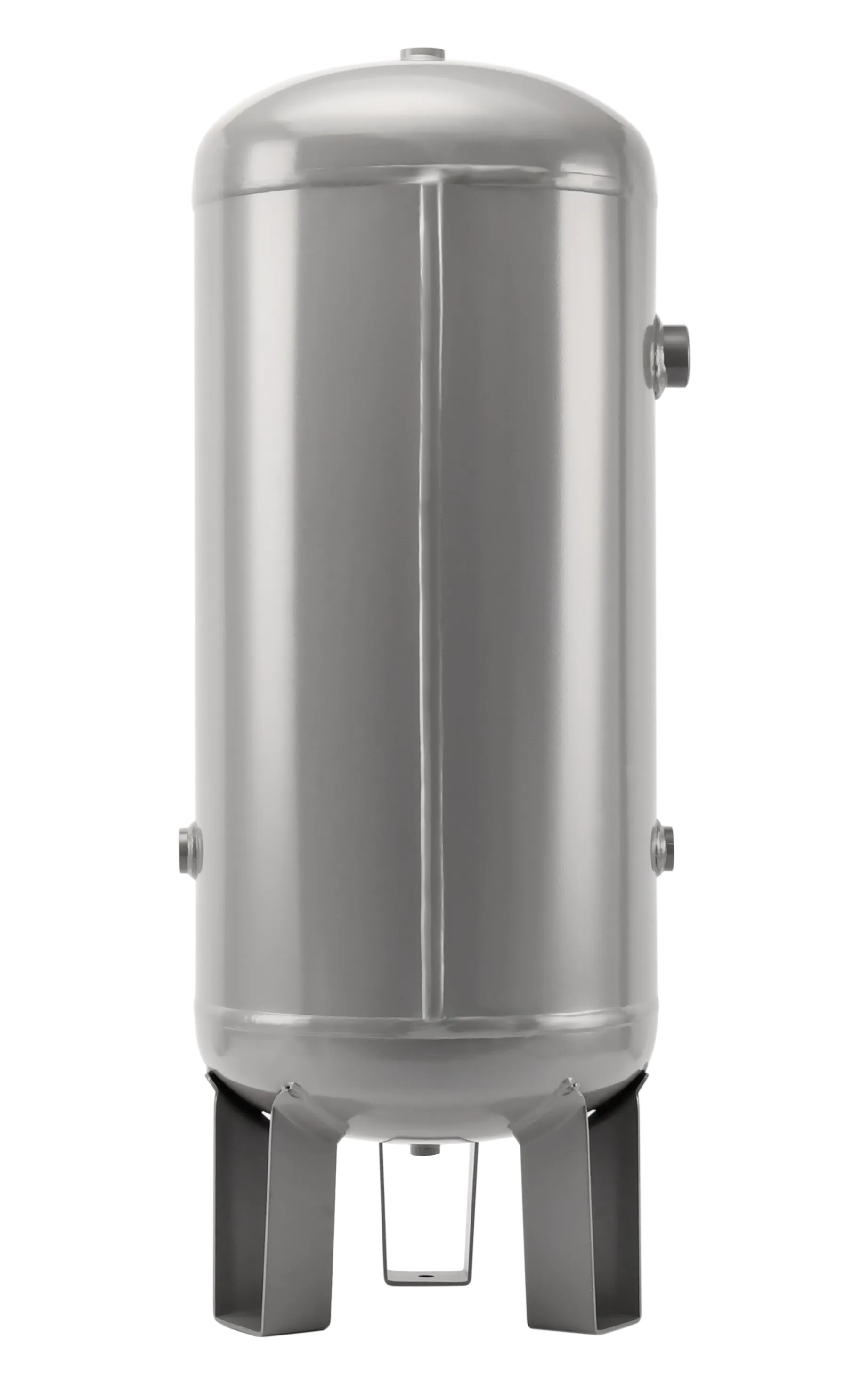
An air receiver is a thin-walled cylindrical pressure vessel. Compressed air inside exerts a uniform circumferential tensile stress on the shell. Under the simplified engineering relationship, hoop stress is proportional to tank diameter and inversely proportional to wall thickness: the larger the diameter, the higher the tensile stress in the shell; the thicker the wall, the more material shares that stress.
This explains a practical observation: at the same wall thickness, a smaller-diameter tank places lower stress on each unit area of shell and can carry higher working pressure. Conversely, an oversized-diameter tank with a thin wall reaches the material limit more easily and has limited pressure capacity. Wall thickness cannot be compared separately from diameter, and "thicker plate means safer" is too rough a rule.
2. A Common Rule of Thumb: Above 350mm Diameter, 4mm Minimum Wall
Under conventional pressure conditions and common materials, there is a rule-of-thumb reference: when tank diameter exceeds 350mm, wall thickness should reach 4mm or more (including 4mm). This rule assumes "conventional pressure service" — compressed-air medium, pressure within the general receiver-tank working range, and ordinary carbon steel material.
It should be emphasized that 350mm and 4mm are an empirical boundary, not a fixed standard independent of pressure and material. Diameter, pressure and wall thickness must be considered together: small diameters can meet pressure requirements with thinner walls, while large diameters need thicker walls, stronger material or structural adjustment to maintain strength.
3. What Actually Determines Wall Thickness
Complete wall-thickness design does not depend on diameter alone; it results from a group of parameters:
Design pressure: the pressure basis for the vessel; higher pressure requires greater wall thickness.
Material strength: carbon steel, stainless steel and other materials differ in tensile strength, allowing different wall thicknesses at the same pressure.
Corrosion allowance: damp, oily or corrosive media require a corrosion margin to prevent thinning over service life.
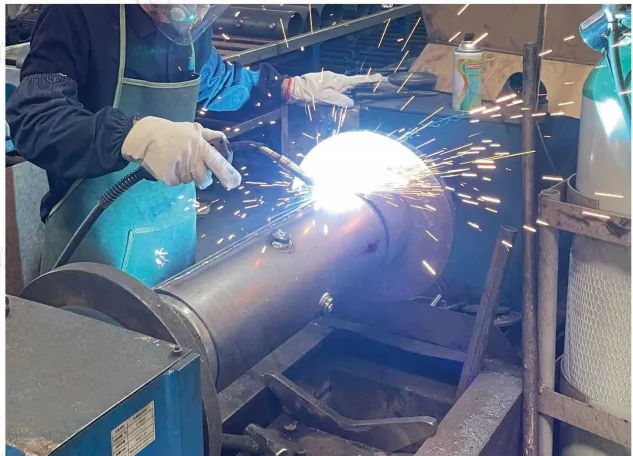
Weld joint efficiency: the quality grade of longitudinal and circumferential welds affects the strength reduction in thickness calculation.
Medium and temperature: high temperature or special media affect material performance, requiring corresponding adjustments to wall thickness and material selection.
In practice, wall thickness is calculated across design pressure, material, corrosion allowance and welding conditions; diameter is only the most visible factor.
4. How YCZX Determines Tank Wall Thickness
On receiver tank orders, YCZX does not apply a fixed wall thickness based on diameter alone. We first confirm working pressure, medium, volume, service temperature and target market, then calculate shell strength and wall thickness under the applicable pressure-vessel code.
For conventional domestic-application tanks, we select suitable wall thickness and material with adequate pressure margin, keeping structure, pressure and medium within code limits. For North American and European export packages, strength calculation and material qualification follow ASME or PED standards, with wall thickness, welding and inspection matched to the export code. Every tank undergoes a hydrostatic test before shipment, with material certificates and test records retained, so wall-thickness selection is backed by data rather than an estimated figure.
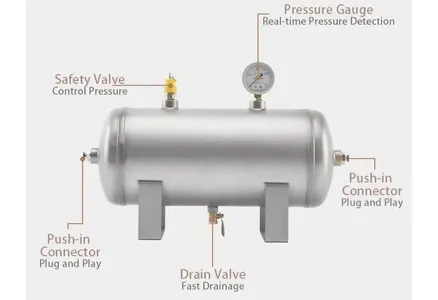
In product configuration, thickness design also considers reinforcement around port openings, bracket weld locations and long-term corrosion protection; carbon steel tanks receive internal rust protection and external painting, while stainless steel tanks are selected for cleanliness and corrosion requirements. Wall thickness, port orientation and brackets can be customized to the customer's package, keeping the tank matched to system conditions.
5. Common Wall-Thickness Mistakes
The first is sizing thickness by diameter alone, ignoring working pressure and medium, which leaves the wall too thin for high-pressure or damp conditions. The second is blindly pursuing maximum thickness on the assumption that thicker is safer; excess thickness raises cost and weight and lengthens initial fill time. The third compares only external plate thickness without considering material grade, weld quality and hydrostatic records. The fourth applies domestic empirical thickness to export tanks without rechecking strength and documentation against destination-market codes. These can be avoided by stating operating conditions up front and having the design reviewed under the proper code.
6. Conclusion
Pressure capacity in an air receiver is determined jointly by diameter, wall thickness, material and operating conditions: at equal thickness, a smaller diameter handles higher pressure, and large-diameter tanks need corresponding thickening or stronger material. Above 350mm diameter under conventional pressure service, wall thickness is generally 4mm or more. A reliable thickness selection is calculated item by item across design pressure, material strength, corrosion allowance and welding conditions. Providing operating conditions and target market to a professional supplier, who sets wall thickness under code and supplies inspection documentation, is what gives the receiver's pressure safety full assurance.