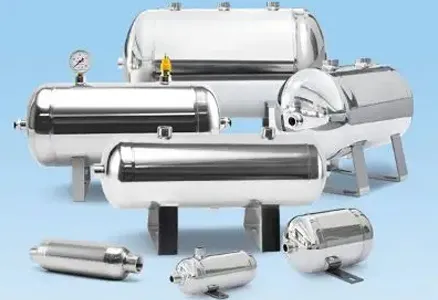
Walk into most workshops and the compressor gets all the attention. It's the big grey box with the display, the one that gets serviced on schedule. The receiver is the plain tank beside it, and most people buy it the way they buy a fuse: small item, doesn't need much thought, just put it in the line.
Then a clamp starts shivering, or painted parts come out with water spots, and suddenly that plain tank is the most interesting thing in the building.
It's worth knowing what it actually does, because it's doing three jobs at once.
The first is buffering. A compressor doesn't push air out evenly — it loads, unloads, loads again. With nothing in between, every one of those swings arrives at your tools. A receiver absorbs the peaks and fills the dips, so the gauge at the tool shows a steady number. It also lets the compressor run in longer stretches instead of switching on and off all morning, which is easier on the motor and on the electricity bill.
The second is catching water. Air leaves a compressor hot and soaked. Inside the tank it slows down and cools, and a good part of that moisture drops out at the bottom, where a drain can carry it off. If the drain is blocked, the water keeps moving — into the filters, the tools, the instruments.
The third is absorbing shocks. When a big consumer starts, line pressure dips. The tank covers that dip so the rest of the shop never feels it.
The order of things
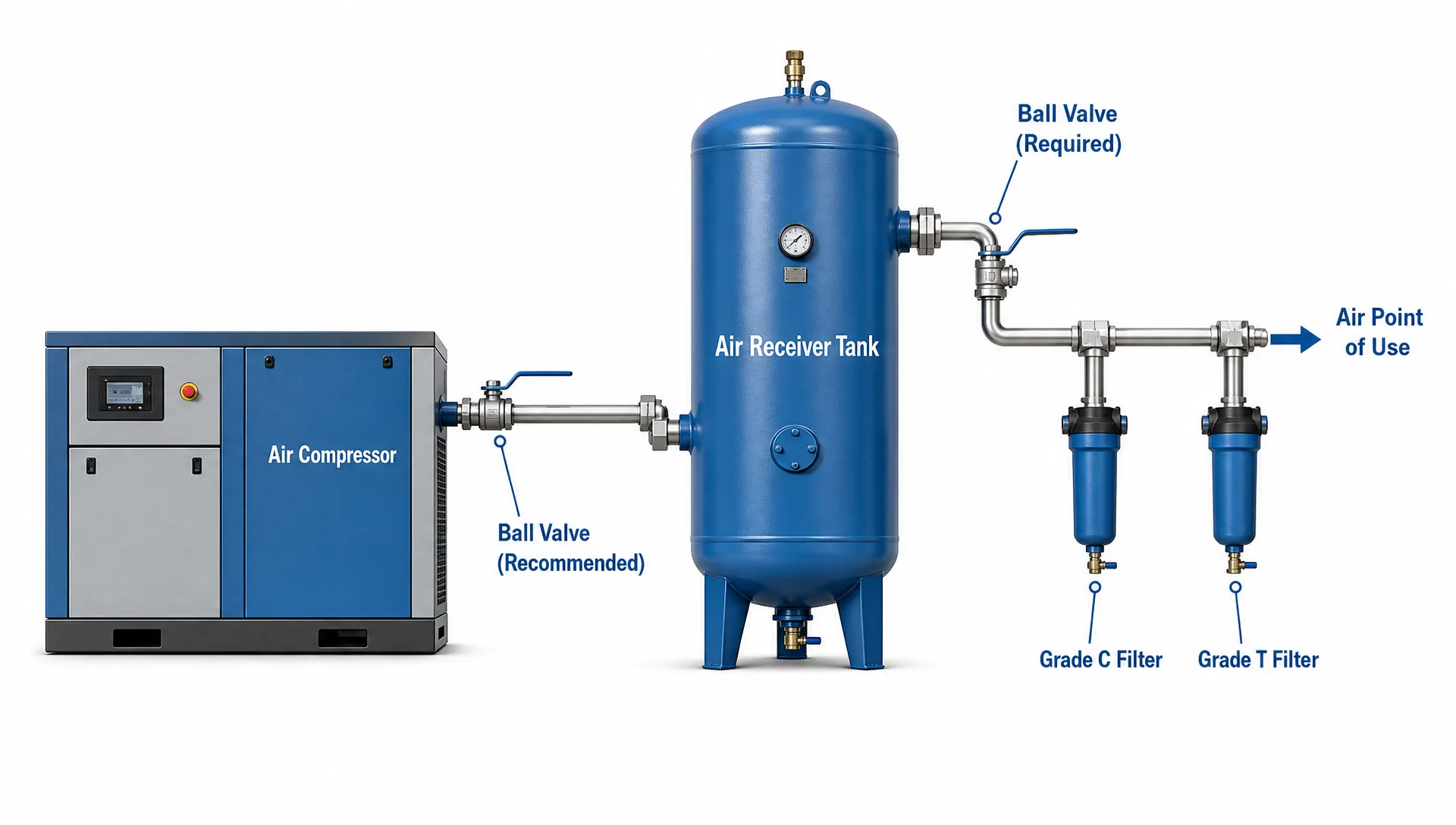
Compressor, valve, tank, valve, filters, equipment.
Look at the drawing on the wall of most plants: the valve before the tank says "recommended", the valve after it says "required". That's deliberate. Every job you'll ever do — changing a filter, chasing a leak, adding a line — sits downstream of that second valve. Without it, the first maintenance day turns into a shutdown. Nobody makes that mistake twice.
Filters go after the tank, coarse first and fine second. The tank has already taken out most of the water by slowing the air down; the coarse filter catches what's left; the fine one handles particles and oil mist. Get the order wrong and the expensive element ends up doing the cheap job — and clogging in weeks.
How big
A workable starting point is twenty to thirty seconds of the compressor's output: a 1 m³/min machine takes roughly 200–300 litres.
Then adjust. If your biggest consumer starts and stops all day, size for that minute rather than the average — sizing on averages is why tanks look fine on paper and small on the floor. And the number on the nameplate is nominal, so a 300 litre receiver holds a bit less than 300 litres of usable air. That's normal, not a trick.
This is the question we get asked most often at YCZX, and quite often the honest answer is that the tank you already have is fine — it just needs to sit closer to the machine.
A few things people skip
Slope the pipe back toward the tank, so water runs to the drain instead of pooling in a low spot.
Drain it. Once a shift, or fit an auto drain. A blocked drain rusts a receiver from the inside, and you usually find out months later when something else fails.
Cool the air before it reaches the tank where you can — hot air carries its water as vapour, and vapour only becomes water you can drain once it cools.
And when the compressor gets upgraded, look at the tank again. We've seen a 10 bar receiver still sitting behind a compressor that had been replaced with a higher-pressure machine. That one was ours. Nothing wrong with it — it just wasn't the tank the new machine wanted.
If you're stuck on this
So if this is where you are, talking to us is a reasonable place to start.
We won't always tell you to buy something new. Often the answer is a smaller change: move the tank closer, turn a valve around, fix the drain. When it does need making, we draw it for your site, check the ports and the certification before it leaves, and stay reachable afterwards when you need a hand or a spare part.
Buying a tank shouldn't be complicated. We'd like it to feel more like asking someone who does this every day.