Rust is one of the most common and dangerous failures for carbon steel air receiver tanks. Many end-users only notice rust spots after leakage or coating peeling appears. Rust corrosion gradually thins the tank wall, reduces the pressure-bearing capacity of the pressure vessel, contaminates downstream compressed air, and may lead to catastrophic rupture under working pressure. For industrial buyers, prevention is always far more cost-effective than later repair or replacement.
Air receiver tank rust is mainly electrochemical corrosion triggered by moisture, oxygen and oil residue inside the tank. Even high-quality carbon steel tanks will corrode quickly without proper anti-corrosion treatment and daily maintenance. As a professional manufacturer of pressure vessels, YCZX has accumulated rich experience in air receiver anti-corrosion design and manufacturing. Below we sort out systematic anti-rust strategies for your reference.
1. Remove Moisture from the Source — The Most Critical Anti-Rust Step
Condensed water is the primary cause of internal rust. During compression, air is heated and saturated with water vapor. After cooling inside the tank, vapor turns into liquid condensate and settles at the bottom. Standing water continuously erodes the weld and bottom plate, forming pitting rust.
Manual drainage: Open the bottom drain valve at least once per shift. Increase frequency for tropical, coastal or rainy workshops with high humidity.
Automatic drain valve: YCZX recommends installing an automatic drain valve on the drain port. It drains water on time without manual operation, avoiding forgotten drainage caused by human error.
Upgrade air treatment: Add aftercooler, refrigerated dryer, adsorption dryer and precision filters upstream of the tank. These devices reduce water vapor and oil content before air enters the tank, cutting corrosion media fundamentally.
2. Choose Tanks with Standard Anti-Corrosion Manufacturing Process
Many cheap tanks skip strict surface preparation. Paint is applied directly over oil, scale and old rust, so the coating will bubble and fall off quickly, and rust spreads under the paint layer.
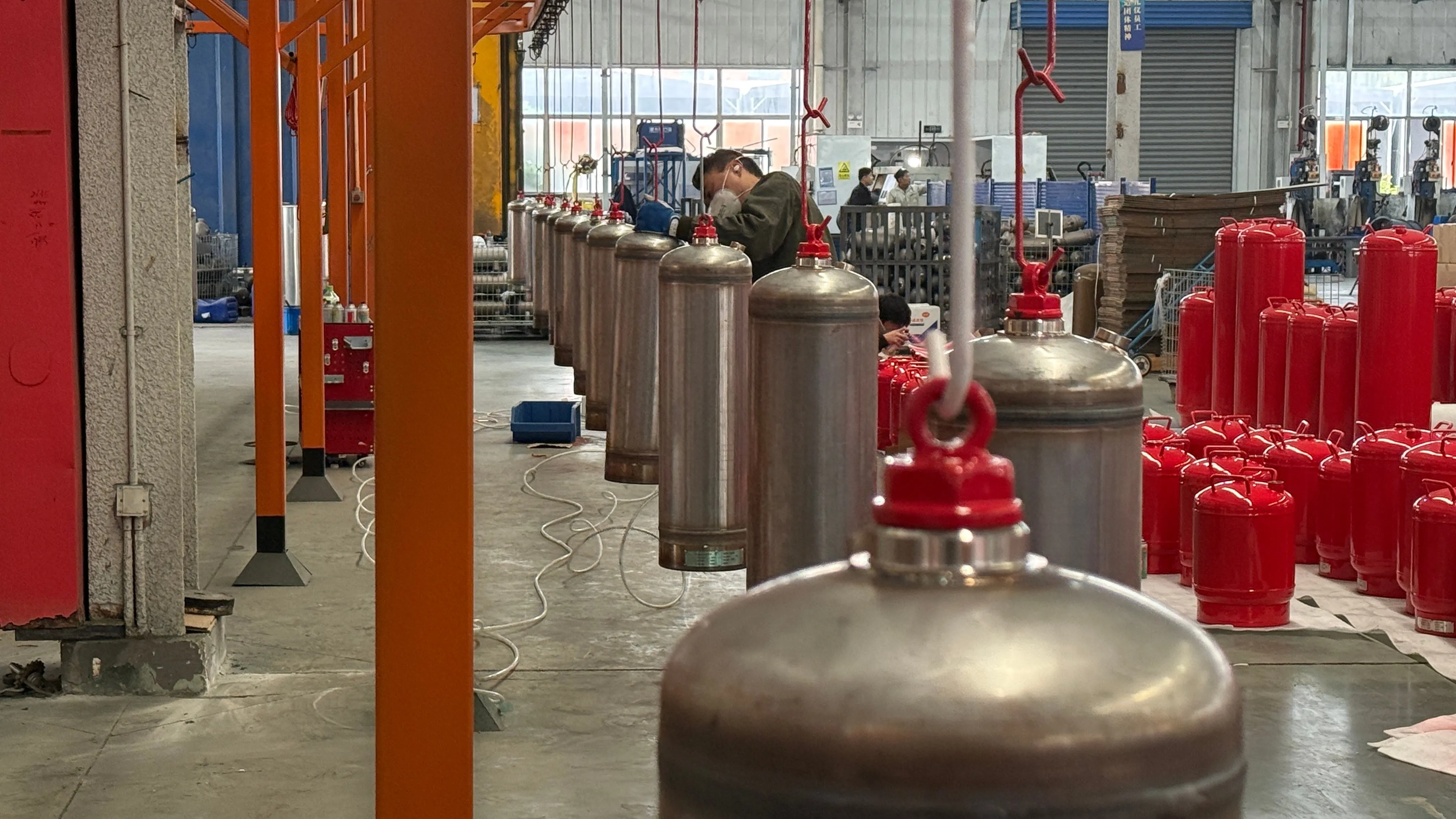
All carbon steel air receiver tanks from YCZX follow a fixed anti-corrosion workflow before delivery:
Shot blasting to SA2.5 grade, removing mill scale, grease, welding slag and rust thoroughly. Shot blasting also forms uniform anchor patterns to improve coating adhesion.
Double coating: Anti-rust epoxy primer + weather-resistant topcoat. Coating thickness is controlled stably to resist moisture and oxygen penetration.
Hydrostatic test and visual inspection before packing. We check welds, surface coating and sealing performance one by one, to rule out hidden defects before shipment.
For special working conditions such as coastal salt spray, chemical plants and high humidity, YCZX also supplies stainless steel air receiver tanks and customized heavy anti-corrosion coating schemes.
3. Optimize Installation & Working Environment
External rust usually comes from poor site conditions.
Place the tank in dry, ventilated indoor space. Avoid outdoor exposure without rain shelters.
Keep away from acid mist, alkaline steam, salt spray and corrosive dust. Coastal sites need extra anti-salt-spray coating.
Do not let the tank bottom sit directly on wet concrete. Use support saddles or brackets to leave air gap, preventing bottom rust caused by ground moisture.
4. Keep Operating Pressure Within the Rated Range
Overpressure operation will not only threaten safety, but also damage the anti-rust coating. Excessive pressure creates tiny deformation and microcracks on steel and coating, letting moisture penetrate and start corrosion.
YCZX marks design pressure, working pressure and test pressure clearly on each tank nameplate. Please follow the rated parameters.
5. Carry Out Periodic Inspection & Maintenance
Rust develops slowly at the beginning. Early inspection can stop corrosion before it becomes dangerous.
Visual check: Check outer paint, welds and bottom for rust spots, blistering or peeling every month.
Thickness testing: For tanks used for more than one year, use ultrasonic thickness gauges to measure wall thickness regularly, especially at the bottom and welding areas.
Internal inspection: Tanks with manholes can be opened for internal check during annual shutdown. Small tanks can adopt endoscopic inspection.
Once pitting corrosion is serious and wall thickness is lower than the minimum allowable value, do not continue using the tank. Replace the pressure vessel immediately to avoid safety accidents.
Summary
To sum up, preventing air receiver tank rust relies on two core parts: reliable manufacturing quality and standardized daily maintenance. When selecting an air receiver tank, prioritize suppliers with complete anti-corrosion processes like YCZX, including SA2.5 shot blasting and dual-layer paint treatment. During operation, focus on draining condensate water on time, improving upstream air drying, maintaining a dry installation environment, and running within rated pressure. Regular visual and thickness inspections help you catch corrosion at an early stage. Light surface rust can be repainted after sanding, while tanks with severe pitting or wall thinning should be replaced directly. Stainless steel options are recommended for corrosive environments such as coastal salt spray. With these combined measures, you can effectively extend tank service life and keep your compressed air system safe.