When selecting a receiver tank, buyers focus on volume, pressure and ports, often overlooking ambient temperature. The tank environment must stay within its rated operating temperature range; outside that range, insulation is needed, or the tank must move to a temperature-controlled room. Temperature affects the tank through material behavior, gas pressure, internal condensation and sealing. This guide explains those effects and how to handle them in selection and installation.
1. Low Temperature: Brittleness, Freezing and Seal Failure
In outdoor or unheated workshops in winter, low temperature affects the tank in three ways.
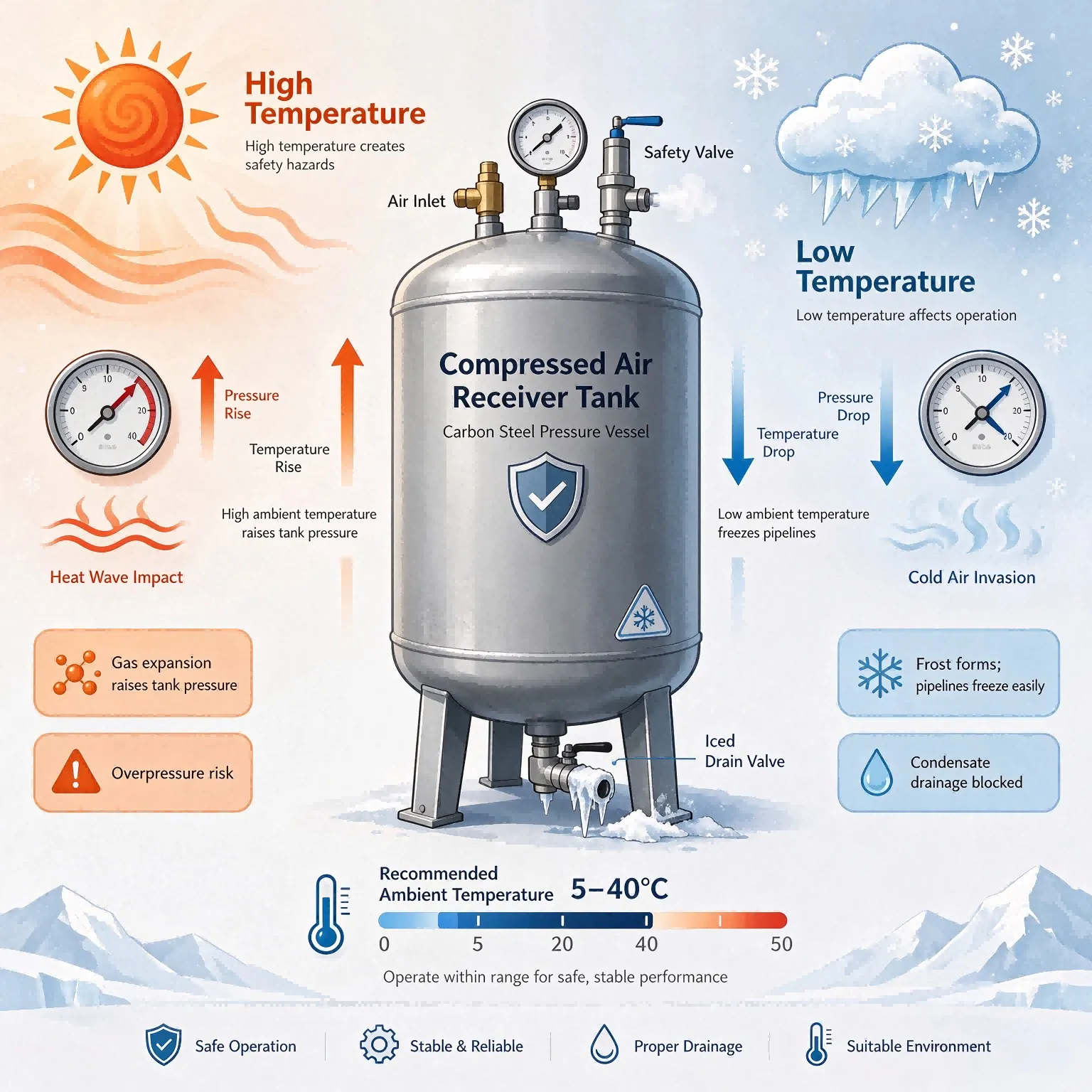
First, material toughness drops. Carbon steel shifts from ductile toward brittle behavior at low temperature, with lower impact and crack-propagation resistance; welds and head edges carry higher risk. Low-temperature service needs tougher material or a low-temperature impact assessment. For low-temperature or outdoor orders, YCZX first confirms regional extreme cold, assesses material toughness, adjusts material grade where needed and pairs low-temperature-rated port seals, rather than applying a room-temperature carbon-steel solution directly.
Second, condensate freezes and expands. Water vapor condenses and freezes, blocking drain valves and lines; ice expansion can split piping and valves or cause local bottom damage. Un-drained condensate after winter shutdowns is the most common cold-weather hazard. YCZX reserves bottom drain ports and drainage space in tank design, advising customers to drain condensate and keep drains open before winter shutdowns; northern export packages include freeze-draining requirements in the installation notes.
Third, seals harden and fail. Gaskets, O-rings and sealants harden and lose elasticity, raising leak risk; seal temperature rating is selected along with the duty to avoid early seal failure in the cold.
2. High Temperature: Strength, Pressure and Aging
High temperature affects the tank from the other direction.
First, material strength falls with heat. Steel allowable stress drops at high temperature, so the same wall carries less pressure capacity; higher material grade or adjusted thickness may be needed. For high-temperature service, YCZX rechecks material allowable stress and wall margin under the applicable code, avoiding pressure-capacity shortfall from heat.
Second, internal gas pressure rises with heat. Gas in a closed tank increases pressure as it warms; high ambient or media temperature can push actual pressure above the room-temperature estimate, raising safety-valve lift risk. The safety-valve port is reserved and matched to the duty with a set pressure, leaving a reliable overpressure relief path.
Third, coating and seal aging accelerates. Heat speeds paint, coating and rubber-seal degradation; outdoor sun and cycling shorten coating life. For high-temperature outdoor duty, we use more aging-resistant external industrial coatings and internal rust protection, lowering long-term corrosion and peeling risk.
3. Understanding the Rated Temperature Range
Every receiver has a rated operating temperature range on the nameplate and technical file, combining material properties, seal temperature limits, medium characteristics and design codes. Confirm that site ambient temperature, media temperature and extreme winter/summer conditions fall within range; long-term outside it rules out using a room-temperature tank directly.
Outside the range, two responses apply: insulation protection — insulation, heat tracing or shading to bring service temperature back into range; or relocation — moving the tank into a heated, ventilated or controlled room. YCZX marks the applicable temperature range in shipped technical files and advises on insulation, draining and layout, helping customers keep installation conditions within design limits.
4. Temperature Points in Selection and Installation
At selection, provide regional extremes, whether the medium carries hot gas, and outdoor installation, so material grade, thickness and seal rating can be set. At installation: shade or insulate outdoor tanks, drain condensate before northern winters and keep drains open, ventilate hot areas and avoid direct sun; choose seals rated for the range. Check drains and seals before cold season, coating and pressure records before hot season.
For export projects, tanks are built to ASME or PED with material certificates, hydrostatic records and nameplate data marking the applicable temperature. Whether indoor room-temperature, outdoor cold or high-temperature duty, material, thickness, seals and protection match the actual conditions rather than a generic universal package.
5. Conclusion
Ambient temperature is not an afterthought: cold tests material toughness, drainage and seals; heat tests strength, pressure margin and coating life. Provide regional extremes, media temperature and installation location before selection, so material, thickness, seals and protection match the duty; outside the rated range, insulate promptly or move into a controlled room. Including temperature in selection and installation keeps the receiver safe and stable through all seasons — the starting point behind YCZX reviewing conditions before setting material and structure on every matched tank.