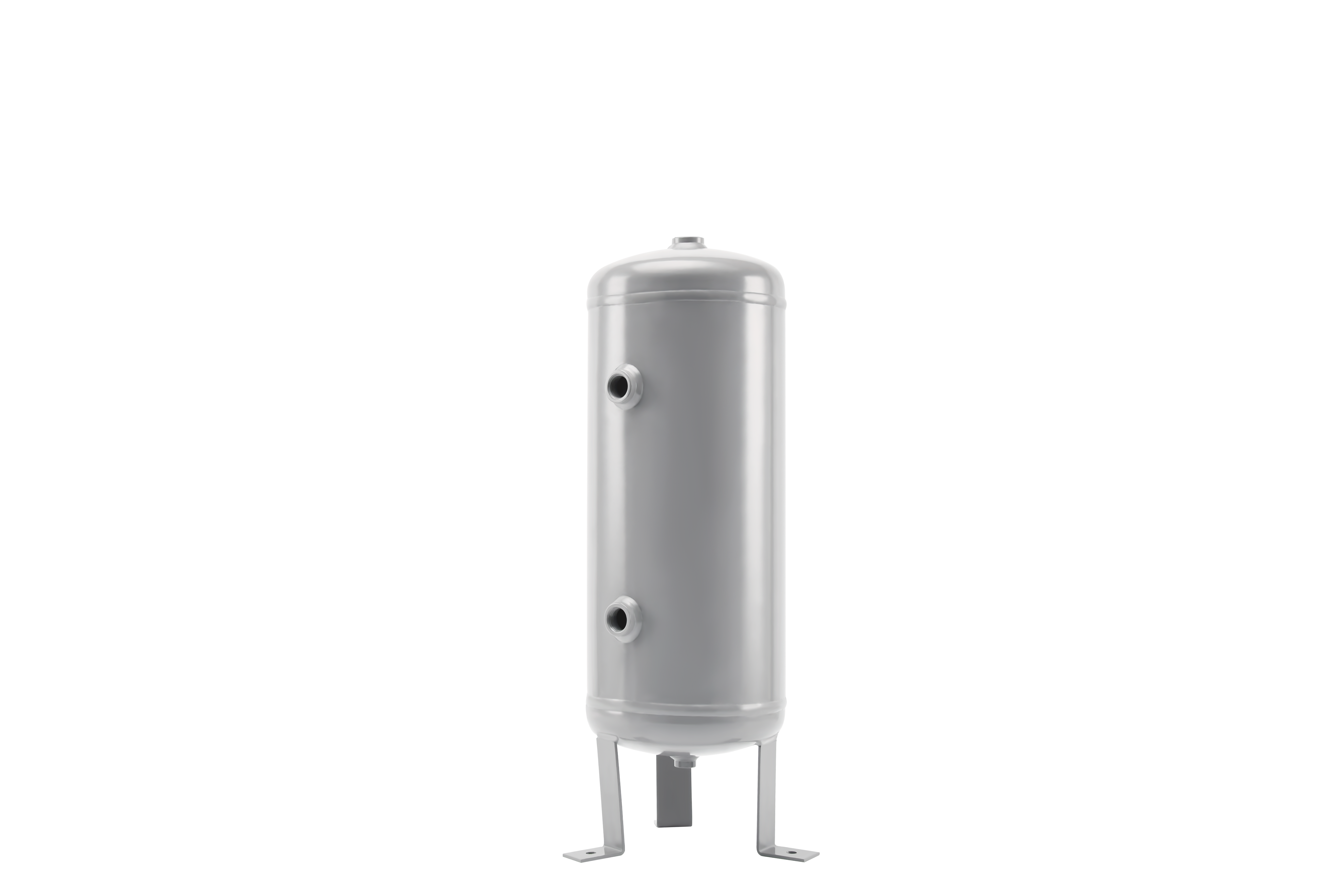
When factory managers and distributors ask us about air receiver tanks, the first question is rarely about price. It is about time: "How many years will this tank give us?" It is a fair question. A compressed air system is only as reliable as the vessel that stabilizes it, and an unexpected tank failure can stop a production line without warning.
At YCZX we design and manufacture pressure vessels for automation equipment companies around the world. In this guide, we explain the real service life of an air receiver tank, the factors that shorten or extend it, and what our engineering team does to make every tank last.
The short answer: 7 to 10 years
Our product manual states a recommended service life of 7 to 10 years for air receiver tanks. That figure is not a marketing promise — it is a practical expectation based on how pressure vessels age in real industrial environments.
Two details matter here. First, "recommended" means the period during which the tank is expected to perform safely with routine inspection. Second, the actual number depends on material, operating conditions, and how faithfully the maintenance schedule is followed. A well-maintained stainless tank in a clean environment and a carbon steel tank in a humid workshop are not the same risk profile.
Material sets the baseline
The shell of a pressure vessel determines how it responds to corrosion. Our tanks follow the GB150 standard for steel pressure vessels, using Q235-B, 16MnR and 16MnDR shell materials depending on the application.
Carbon steel is the workhorse of the industry. In service, a carbon steel tank exposed to its environment develops a mild corrosion rate of less than 0.05 mm per year, which is why our manual gives it a recommended service life of around 7 years. Stainless steel behaves differently: when handling clean gas and liquid, it is essentially unaffected by corrosion, and we also rate it at a 7-year recommendation — often with more margin in practice. Aluminum alloy tanks are chosen where weight and corrosion resistance are priorities.
The takeaway for buyers: material is not a premium upgrade; it is a lifespan decision.
Maintenance is the real life-extender
If material sets the baseline, maintenance decides where the tank actually lands inside that 7–10 year window. Our maintenance checklist is deliberately simple:
Drain the tank at least once every day to remove accumulated water and prevent internal rust.
Check the pressure relief valve on the top of the tank regularly.
Watch the intake process and inspect the piping and tank for leaks until working pressure is reached.
Inspect the area around the tank daily for corrosive liquids or fluids.
Check the airtightness of the air piping and repair leaks immediately.
Every month, look for rust or damage on the shell and repair it promptly.
Every year, inspect welds for integrity and check whether seals have aged.
Every year, have the pressure gauge and safety valve calibrated.
Notice how many of these items are daily or monthly. Longevity is not decided by an annual inspection — it is decided by small habits repeated over thousands of operating days.
Installation and operating conditions
The first year of a tank's life is often the most revealing. Our installation guidance reflects what we see in the field:
Place the tank on a level surface. Vibration on an uneven base can crack the weld between the support legs and the shell.
Avoid external impact, extra load, and contact with corrosive materials.
Keep the ambient temperature within the equipment's specified range; use insulation or a climate-controlled room if necessary.
Never exceed the maximum working pressure. Overpressure damage is the user's responsibility.
Never disassemble under pressure — shut down and vent to zero first.
Connect with rigid piping and a buffer bend; fit the inlet low and the outlet high, using 1-inch or 6-point galvanized pipe where appropriate.
Install the ball valve and C-grade / T-grade filters as shown in the system diagram.
Each point protects a different failure mode: weld fatigue, corrosion, overpressure, and contaminated air.
Compliance is part of lifespan
A tank's service life is also a regulatory question. Pressure vessel air tanks require use registration, periodic inspection during their recommended life, and retirement when that life is reached. For simple pressure vessels, registration is generally not required, but the maintenance and inspection schedule still applies — and local rules should always be confirmed.
Two rules deserve special attention. No valve may be installed between the safety valve and the tank body. And if the maximum intake flow exceeds the tank's safe discharge capacity, the system must include an additional pressure relief device. Safety valves and gauges must be calibrated and maintained according to national metrology requirements.
How YCZX builds for longevity
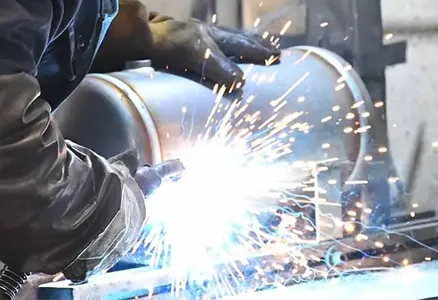
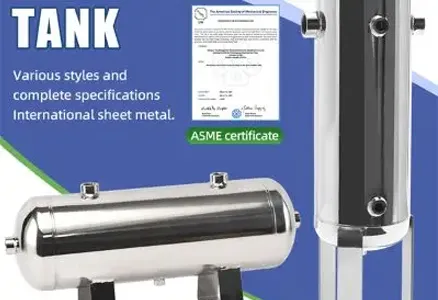
We are a pressure vessel specialist holding the Special Equipment Design License, the Special Equipment Manufacturing License and the ASME certificate. Our company introduced the latest international technology, and every tank is carefully engineered before it reaches a customer.
That background matters when you look at the details above. The corrosion-rate figures, the inspection intervals and the installation rules in this article come from our own product manual — not from a generic template. Our mission is simple: to provide quality products and services to automation equipment companies worldwide. A tank that reaches the end of its recommended life safely is the clearest proof of that promise.
Signs it is time to replace
Even with careful maintenance, a tank eventually reaches the end of its service life. Watch for visible rust or wall thinning, cracks around welds or supports, a gauge or safety valve that fails calibration, repeated leaks, or simply the arrival of the recommended 7–10 year mark. When in doubt, retire the vessel rather than repair it indefinitely.
Summary
The 7–10 year recommended service life of an air receiver tank is a practical expectation shaped by material, operating conditions and maintenance — not a fixed rule. A carbon steel tank, with an environmental corrosion rate below 0.05 mm per year, carries a recommendation of around 7 years; a stainless steel tank, unaffected by corrosion when handling clean gas and liquid, is rated at 7 years as well and often delivers more in practice. This figure is a recommendation rather than an automatic shutdown order: a tank that has passed thorough inspection and a compliance review can continue in service, provided inspection frequency is increased. If the corrosion rate exceeds 0.05 mm per year, however, an earlier replacement should be planned. And even a corrosion-resistant stainless tank still depends on the basics — daily drainage, leak checks and annual calibration. Simple pressure vessels are generally exempt from use registration, but the maintenance and inspection schedule still applies, subject to local rules. Ultimately, how long a tank serves safely is decided not only by the material and workmanship at the factory, but by disciplined operation and maintenance day after day.