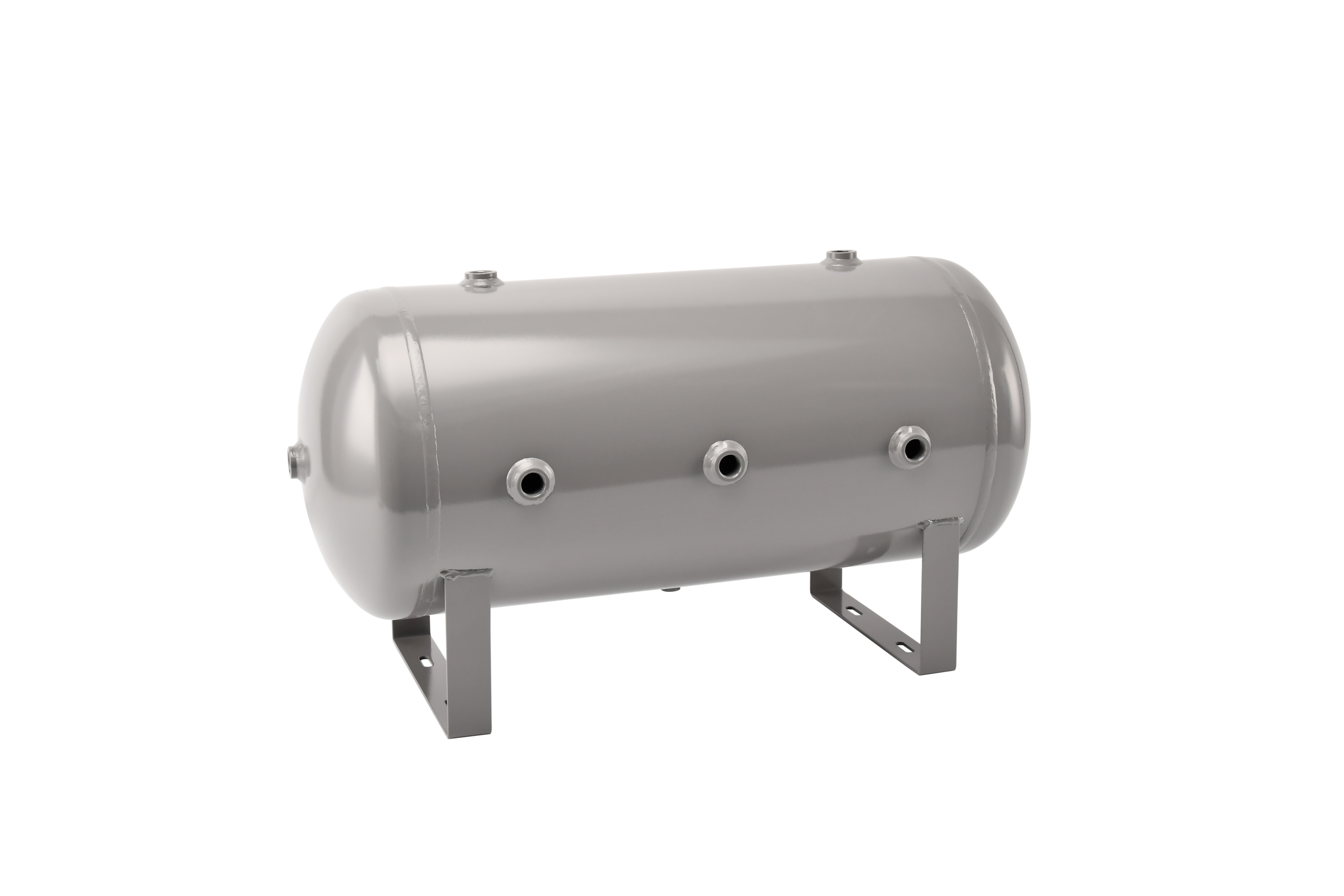
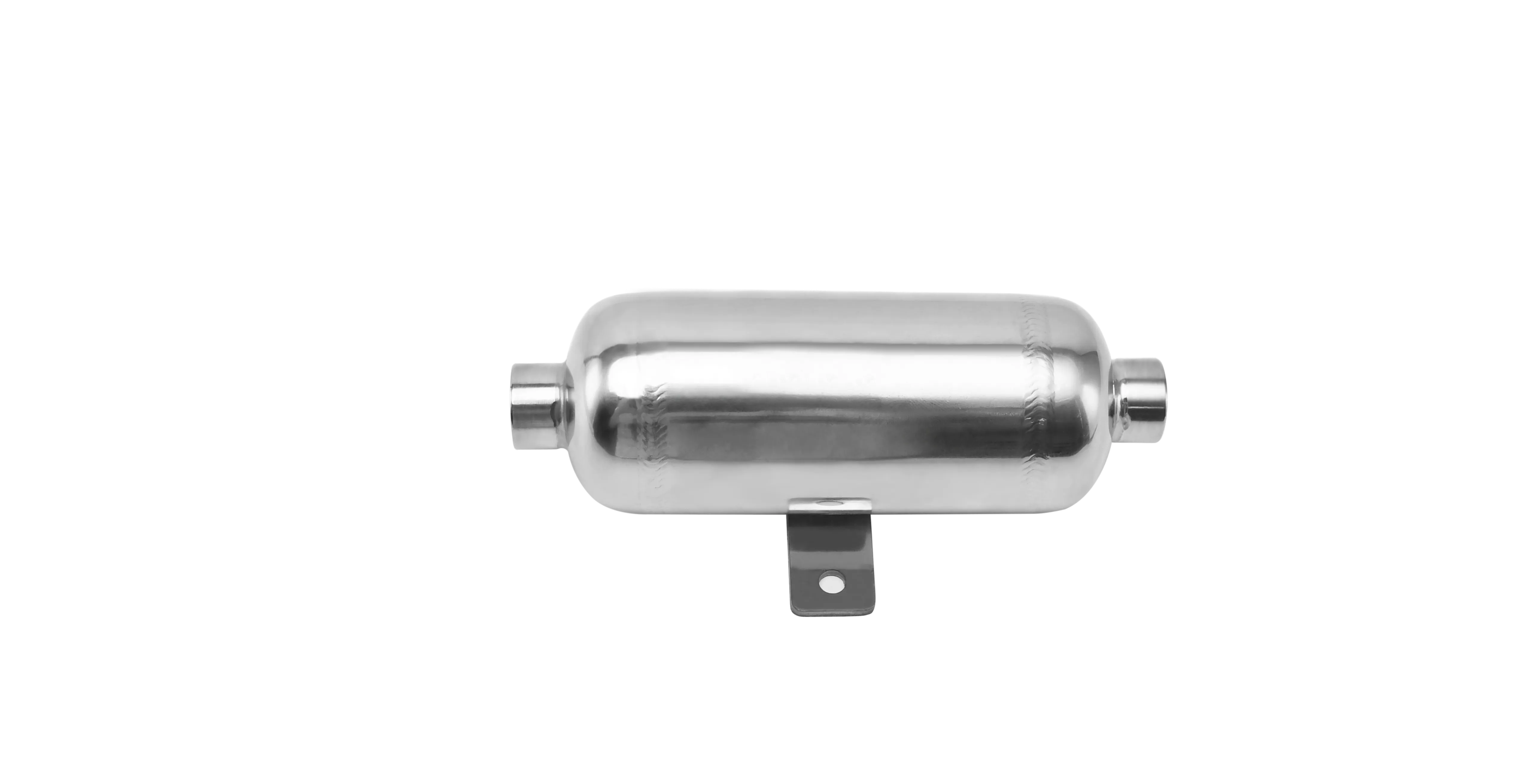
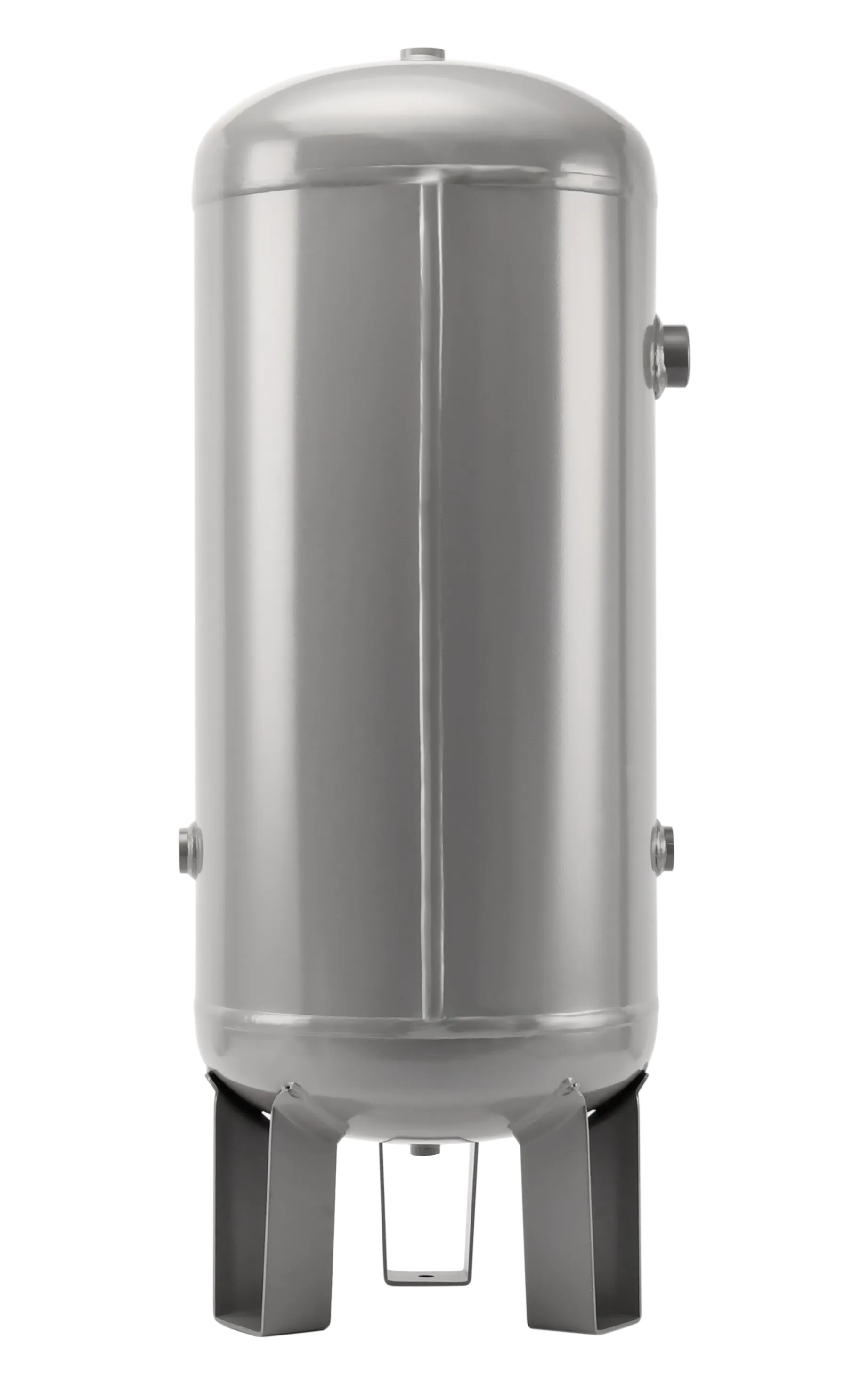
A gripper that held a part reliably in the prototype cell starts dropping it eight months after commissioning. The gauge still reads 6 bar, the compressor is unchanged, and nobody has touched the regulator - but the receiver upstream is half full of condensate, the filter is loaded, and effective pressure at the gripper has quietly fallen to 4.6 bar. Nothing in the vessel failed. The pressure vessel application was designed for the wrong thing: a general-purpose air tank where the job needed stored volume close to the point of use.Applications are sorted below from the lowest pressure duty to the highest, because the requirement that changes a vessel most is not the industry name but the pressure, flow pattern and cleanliness the process demands. YCZX supplies receivers across that range - 0.1 L to 10 m³, up to 10 MPa, in carbon steel, stainless and aluminium - so the differences between duties show up directly: same drawing, different shell material, different finish, different port schedule.
Common Pressure Vessel Applications in Industry
Common pressure vessel applications are best grouped by the duty the vessel performs - storage, pressure stabilisation, separation or containment - because that duty, rather than the industry sector, determines what the vessel must be built to do.
Five patterns cover most industrial demand:
Compressed air storage in general manufacturing, where a receiver absorbs demand swings between a compressor running at fixed output and tools drawing air intermittently.
Process gas and chemical service, where the vessel holds a gas or liquid at pressure and the material choice is driven by corrosion rather than by strength.
Food, beverage and pharmaceutical service, where the vessel sits in a hygienic envelope and surface finish becomes a design requirement.
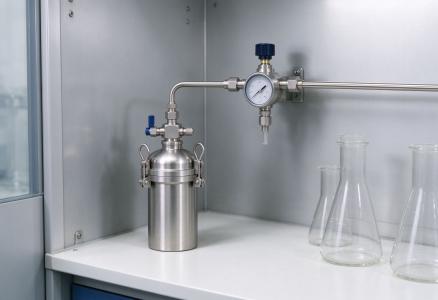
Medical and laboratory gas supply, where small high-pressure vessels feed analysers, breathing systems or test benches.
Energy and building services, where buffers decouple heat pumps, boilers or district loops from load changes.
Two numbers explain why compressed air tops this list of industrial applications. Compressed air typically accounts for around ten percent of industrial electricity use, and leakage commonly wastes between twenty and thirty percent of the air a plant produces. A receiver is the cheapest instrument for reducing both, because stored volume lets the compressor run at full load for shorter periods instead of part-loading continuously.
Pressure Vessels in Compressed Air Systems
In a compressed air system the pressure vessel's application is to convert an intermittent demand profile into a steady compressor duty, and every other benefit - pulsation damping, condensate knock-out, dryer stability - follows from that primary function.
The energy argument is arithmetic rather than theoretical. Every extra bar of discharge pressure costs roughly six to seven percent of compressor energy, so a system running at 8 bar to satisfy one undersized branch pays a permanent premium. Stored volume fixes that by letting the plant run at a lower average pressure with a small buffer covering peaks.
The storage choice also decides where water ends up. A receiver placed before the dryer collects bulk condensate and takes the first hit of oil carry-over; one placed after the dryer polishes the air and stabilises downstream pressure but needs a different drain schedule. Specifying one without stating the other is how plants end up with a wet receiver feeding a dryer that was bought to protect a receiver.Where the system includes a booster, the storage requirement is set by the booster's cycling rather than by the compressor, which is why the pressure vessel applications guide on this site separates booster duty from general receiver duty. A 5 L vessel behind a booster pump does a different job from a 500 L receiver behind a screw compressor, even though both are called air tanks on the quotation.
Pressure Vessels in Pneumatic Automation
In pneumatic automation the pressure vessel's application is to hold pressure close to the actuator, so that gripper force, cylinder speed and cycle time stay inside the tolerance the cell was designed for.
This is the duty most often mis-specified, because the volumes are small and the pressures look trivial. Gripper force scales almost linearly with pressure: a tool specified at 6 bar delivering 40 N of grip force delivers about 27 N at 4 bar, a third less, and that is exactly the margin that decides whether a part slips at month eight. Point-of-use storage - a small aluminium or stainless receiver at the cell, 5 to 20 L - keeps the local pressure stable during simultaneous actuation of several cylinders and prevents one valve from starving another.
The second automation requirement is air quality. A cell with proportional valves and small-bore tubing is far more sensitive to particulate and moisture than a workshop with impact tools, because a 0.1 mm deposit in a 4 mm line is a real restriction. Here the receiver's internal finish matters as much as its volume: an uncoated carbon steel shell releasing oxide will eventually block a valve that costs more than the vessel did, so an industrial air tank with internal coating or stainless construction is the cheaper five-year decision.
Automation cells also cycle more than general plant air. A receiver at a cell may see a pressure swing every few seconds, which is a fatigue environment rather than a static one. That is one reason small receivers for automation are usually built from seamless aluminium or stainless shells rather than welded carbon steel plate.
High-Pressure Gas Storage and Process Applications
High-pressure gas storage applications are defined by the pressure and volume product they work at, starting around 15 bar where a standard compressed air receiver ends and rising through 40 bar for gas banks and breathing air to 100 bar for specialised process and test duty. Vessels for high pressure applications are quoted on a different basis, because relief sizing and weld examination dominate cost.
The design consequences arrive faster than the pressure rises. A pressure vessel tank filled rapidly from a high-pressure source heats up, because the compression work performed on the gas ends up in the shell and the gas itself, so the design temperature is set by the fill cycle rather than by ambient conditions. Relief devices must be sized for a fast fill from a large upstream source, not for a slow leakage event, and the drain or bleed arrangement has to let the vessel be emptied safely before any intrusive work. Purity adds another layer: breathing air systems require oil-free construction and a documented cleanliness regime, while analyser and test-bench supplies care more about dead volume and pressure stability than about volume in absolute terms.
| Application | Typical pressure | Vessel role | Driving requirement |
|---|
| General compressed air | 7 to 10 bar | Storage and condensate knock-out | Drain access, code certification |
| Food and pharmaceutical air | 6 to 10 bar | Oil-free storage in a hygienic envelope | Surface finish, 304 or 316L shell |
| Pneumatic automation cell | 4 to 6 bar | Local pressure reserve at the actuator | Fast response, small volume, clean internals |
| Breathing air and gas bank | 15 to 40 bar | Reserve supply for intermittent demand | Relief sizing, oil-free construction, purity |
| Process and test duty | up to 100 bar | Containment under rapid fill | Thick wall, full NDE, notified body witness |
| HVAC and district buffer | 3 to 6 bar | Hydraulic decoupling of source and load | Low velocity, stratification, insulation |
Beyond about 40 bar the choice between a vessel and a cylinder bank becomes commercial rather than technical: cylinders are standardised, transportable and rented, a vessel is fixed, custom-built and owned.
How Application Requirements Affect Material and Vessel Design
Application requirements reach the drawing through four translations: corrosion resistance sets the alloy, cleanliness sets the surface finish, cycling sets the shell construction, and the certification market sets the inspection regime. Materials: carbon steel with an internal coating for general air; 304 for humid service; 316L for chloride, food and pharmaceutical duty; aluminium for small automation receivers.The cost difference is not marginal: a stainless shell can cost two to three times the carbon steel equivalent, so the specification should name the corrosion mechanism rather than the alloy alone.
Finish is the second fork and it is usually under-specified. Hygienic duty is normally called out as a surface roughness target around 0.8 µm or finer on product-contact surfaces, with crevice-free welds, full penetration joints and drain points placed so the vessel can be cleaned. In stainless vessels the internal surface also needs pickling and passivation after welding, because heat tint from the weld is where corrosion starts. A vessel that meets the pressure requirement but not the finish requirement will pass inspection and fail an audit.
Cycling and certification complete the picture. A cell receiver seeing a pressure swing every few seconds is a fatigue item and is better made seamless; a static plant receiver with weekly cycles can be welded plate. And the certification route travels with the application: a vessel bound for a European food plant needs a CE mark under the Pressure Equipment Directive plus food-contact compliance, while the same duty in North America needs an ASME stamp and, for Canada, a CRN. Buyers who need a non-standard combination - unusual orientation, extra ports, a specific finish, two certification markets at once - are usually better served by a large storage vessel used for industrial purpose than by adapting a catalogue model, and YCZX builds those across three plants with the shell, finish and paperwork specified together.
FAQs About Pressure Vessel Application
1.What are the most common pressure vessel applications in manufacturing?
Compressed air storage, process gas containment and hygienic air supply in food or pharmaceutical plants. Together they account for the majority of vessels bought by general industry.
2.Why does a pneumatic cell need its own receiver?
Because plant pressure measured at the compressor is not the pressure at the gripper. Local storage keeps actuator pressure stable when several cylinders fire together and when the main line is recovering after a demand spike.
3.What pressure is used for high-pressure gas storage?
Gas banks and breathing air systems commonly run 15 to 40 bar, while process and test vessels can reach 100 bar. Anything above roughly 40 bar is usually evaluated against cylinders on cost and logistics.
4.Does the application really change the vessel's material?
Yes, and it is the largest single cost variable after pressure. Carbon steel suits dry compressed air, 304 suits humid service, 316L suits chloride, food and pharmaceutical duty, and aluminium suits small automation receivers.
5.How does air quality class affect vessel choice?
A system targeting a dry, low-particle class needs a vessel that does not add rust, oil or debris of its own. That means coated carbon steel or stainless internals, plus a drain arrangement that keeps collected water out of the airstream.
6.Can one vessel serve several applications?
Only when the requirements overlap. A vessel specified for breathing air can serve general plant air, but a general-purpose receiver cannot be upgraded to breathing air duty after installation without new certification and cleaning.
Conclusion
The pressure vessel application decides almost everything that matters: how much volume is useful, where the drain sits, which alloy survives the service, what finish passes an audit, and which certification route clears customs. Specifying by industry name gets a general-purpose tank; specifying by pressure, flow pattern and cleanliness gets equipment that still holds its numbers eight months later. If an application is unusual enough that no catalogue model fits, send the duty, pressure, finish and destination market to YCZX.
References