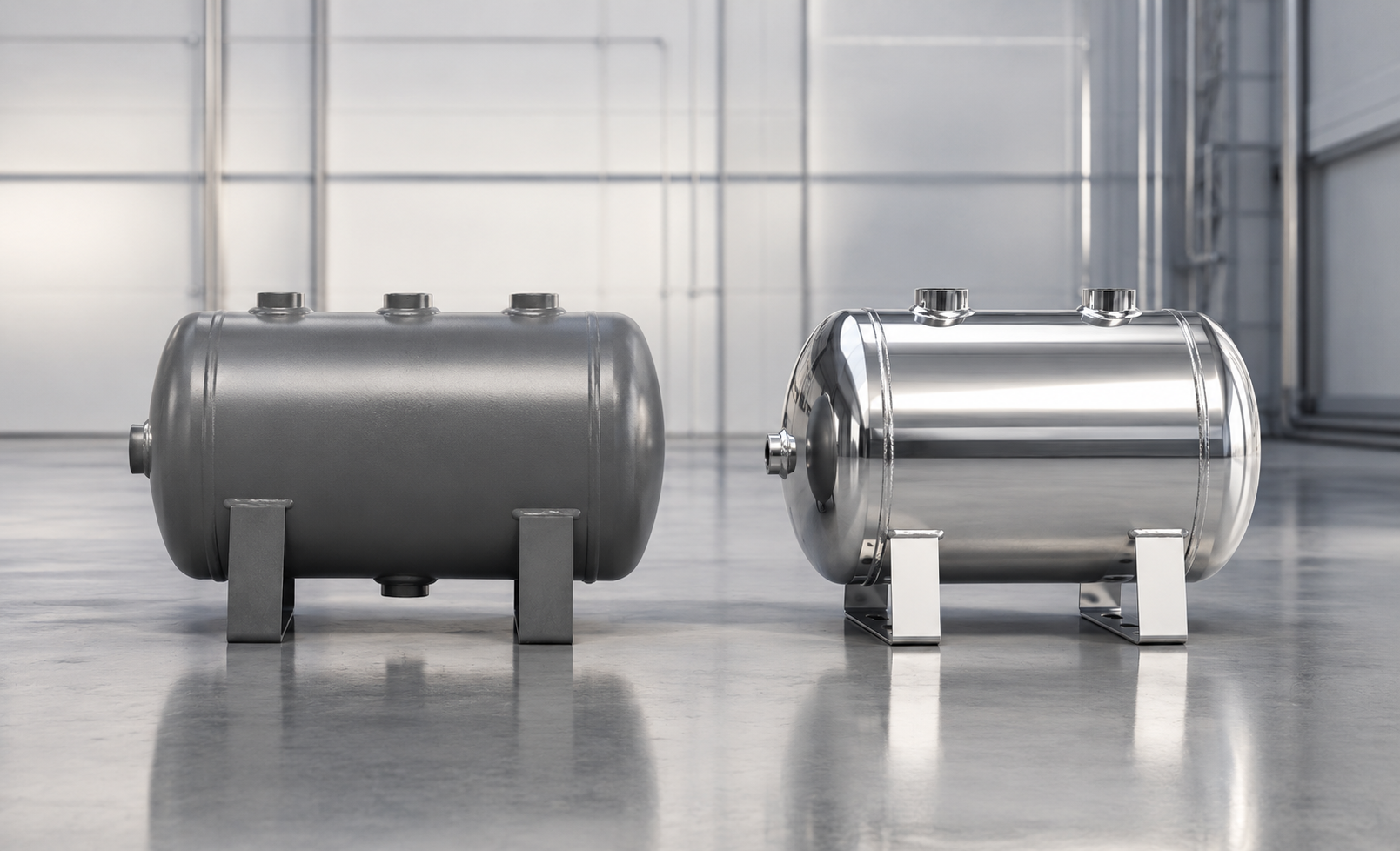
carbon steel air tank is not just a storage container in a compressed air system. For industrial buyers, it directly affects air pressure stability, compressor efficiency, production safety, and the long-term reliability of the equipment. Whether the air tank is used in automated production lines, pneumatic tools, manufacturing equipment, or processing systems, choosing the right design plan before ordering can help reduce operational risks and enhance the stability of the entire compressed air system.
YCZX specializes in manufacturing certified air receiver tanks for industrial compressed air systems, including both standard and customized Carbon Steel Air Tanks. Before placing an order, buyers need to focus on understanding materials, pressure requirements, tank structure, certification requirements, and the supplier's technical support capabilities.
Carbon Steel: What Is It? Why is it suitable for air receiver tanks?
For buyers searching for carbon steel what is it, it can be simply understood as: carbon steel is a type of steel where carbon is the main alloying element. In industrial pressure vessel applications, carbon steel is widely used because it offers a good balance between strength, durability, machinability, and cost control.
This is particularly important for air receiver tanks. A carbon steel air tank needs to safely store compressed air under working pressure, withstand repeated pressure changes, and provide a stable air source for downstream equipment. Compared to some higher-cost alloy materials, carbon steel is often more suitable for ordinary industrial compressed air systems, especially in applications that value both structural strength and project cost.
YCZX's carbon steel air receiver tanks can be used for reliable compressed air storage and transmission. Depending on different project requirements, buyers can communicate with YCZX about material grades, surface coating, pressure ratings, installation methods, and interface design details.
Carbon Steel Air Tank How does it support stable operation of compressed air systems?
The air consumption of a compressed air system is not always stable. Production lines, pneumatic cylinders, pneumatic tools, packaging equipment, and processing equipment may all produce instantaneous air consumption fluctuations during operation. One of the roles of a carbon steel air tank is to help buffer these fluctuations.
Air receiver tanks can store compressed air, stabilize system pressure, and reduce unnecessary frequent start-stop of compressors. This helps the entire pneumatic system operate more smoothly. In many industrial scenarios, air receiver tanks can also work with drainage and air treatment components to help settle moisture in the compressed air, reducing the risk of moisture entering downstream equipment.
Therefore, buyers should not view air receiver tanks as mere accessories. They are one of the core components in the design of compressed air systems. If capacity, pressure rating, or installation form is chosen incorrectly, it may affect air source stability, equipment lifespan, and maintenance frequency.
What key specifications need to be confirmed before ordering?
Before ordering a carbon steel air tank, buyers should prepare several key parameters in advance, including tank capacity, working pressure, design pressure, installation method, interface specifications, drainage method, and certification requirements.
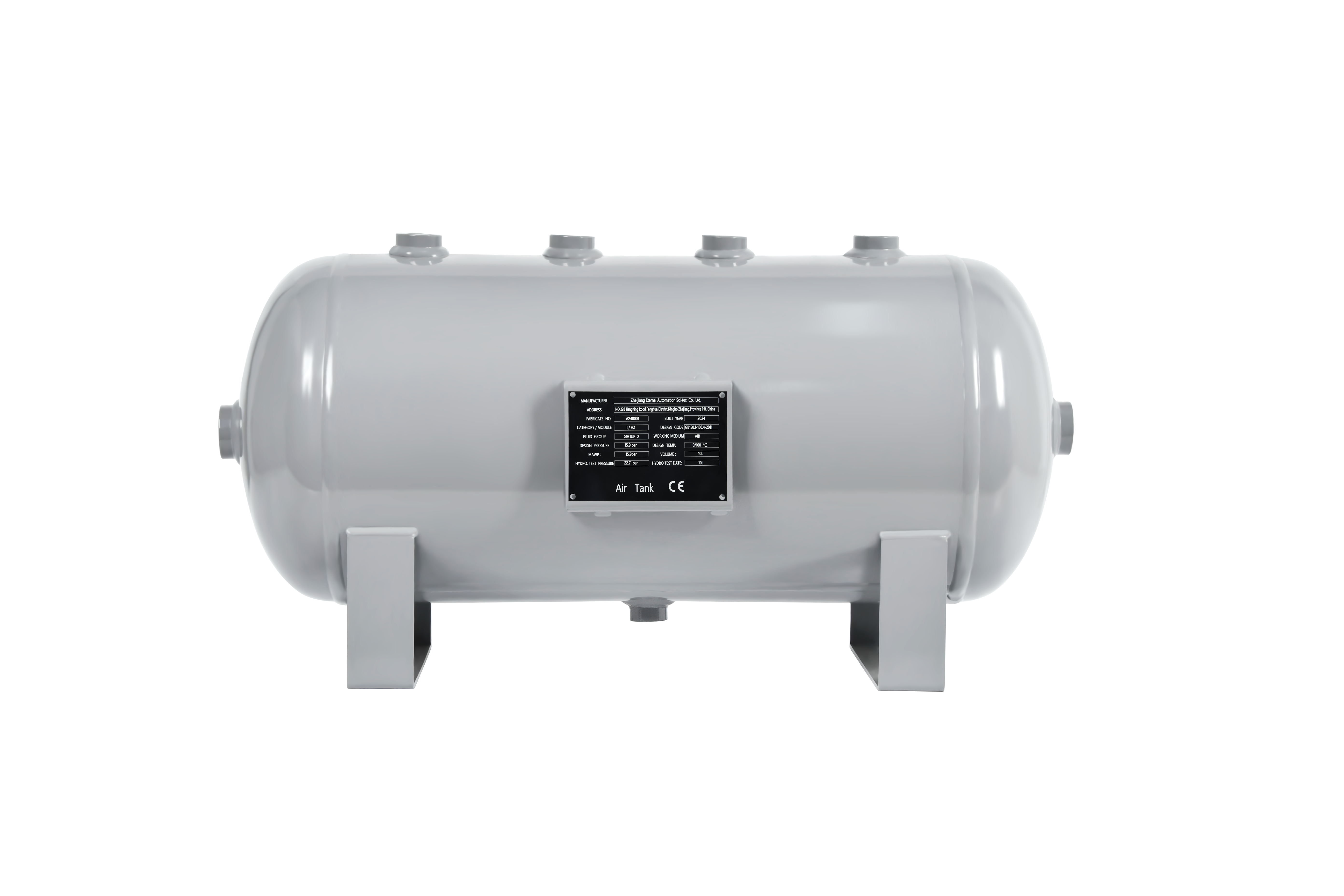
Capacity needs to match the system's air consumption needs. If the capacity is too small, it may not provide enough buffering capability; if too large, it may increase costs and occupy unnecessary installation space. Working pressure must match the compressor and downstream equipment. Buyers also need to confirm whether the air receiver tank is using a vertical or horizontal structure, as this will affect footprint, pipeline layout, and maintenance convenience.
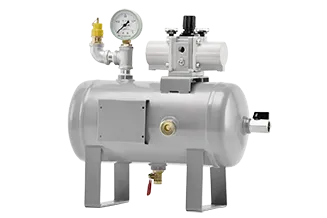
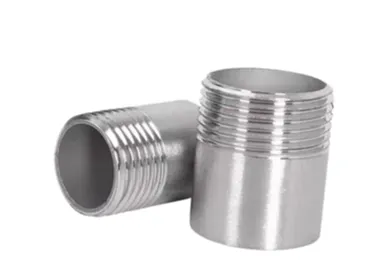
Interface details are equally important. Different systems may require different sizes of inlets and outlets, flanges, threaded interfaces, safety valve positions, pressure gauge interfaces, drainage valves, or mounting brackets. For custom projects, YCZX can assist buyers in confirming these design details before production.
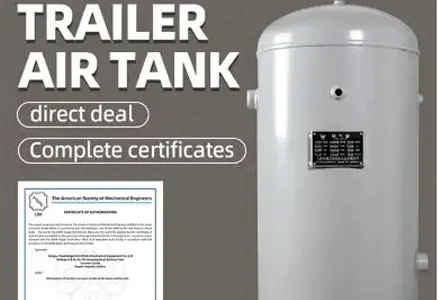
If the air receiver tank needs to be used in markets that require ASME, CE/PED, or other pressure vessel certifications, relevant certification requirements should be clarified at the project's initial stage. Certification will affect design, documentation, manufacturing inspection, and final delivery.
Why are Carbon Steel Tanks commonly used in industrial applications?
carbon steel tanks are widely used in compressed air systems primarily because they can provide strong mechanical performance at a reasonable cost. For many factories, workshops, and equipment manufacturers, carbon steel can meet industrial air storage needs while helping control the overall project budget.
In industrial environments, air receiver tanks may face long-term vibration, continuous operation, frequent pressure cycles, and heavy-duty conditions. As long as design, manufacturing, coating, inspection, and maintenance are done properly, carbon steel air receiver tanks can provide reliable support for these conditions.
YCZX can produce carbon steel tanks suitable for different compressed air needs, including compact air receiver tanks, vertical air receiver tanks, horizontal air receiver tanks, high-pressure models, and customized configurations. This way, buyers can more easily choose the appropriate tank solution based on the compressor system, equipment layout, and target market requirements.
When should you choose a custom carbon steel air receiver tank?
Standard air receiver tanks are suitable for many conventional applications, but some projects require custom designs. Buyers may need special sizes, additional interfaces, specific installation structures, higher pressure ratings, custom coatings, special drainage configurations, or certification documents for export markets.
A custom carbon steel air tank is particularly suitable for projects with limited installation space, needing to connect to existing pipelines, or needing to match OEM equipment structures. Through customized design, buyers can reduce later modification work, thereby saving installation time and reducing on-site risks.
If buyers are still comparing supplier capabilities, they can read this related article: How to Judge a Reliable Carbon Steel Tank Manufacturer for Air Receiver Tank Projects?. This article will further explain how to evaluate the manufacturer's production capability, quality control, and certification support.
Conclusion: Choosing the Right Carbon Steel Air Tank to Enhance Pneumatic System Safety
Ordering the right carbon steel air tank is not just about size and price. Industrial buyers need to comprehensively evaluate materials, pressure ratings, capacity, installation layout, interface design, certification requirements, surface treatment, and customization needs before confirming procurement.
As a professional air receiver tank factory, YCZX can provide both standard and customized carbon steel air receiver tank solutions for industrial compressed air systems. If you need to choose a suitable air receiver tank for a compressed air system, you can submit the required capacity, pressure, application scenario, installation layout, and certification requirements via Contact YCZX to get more tailored technical advice and quotations.